
Screen printing Munich – Get your T-shirts & textiles printed
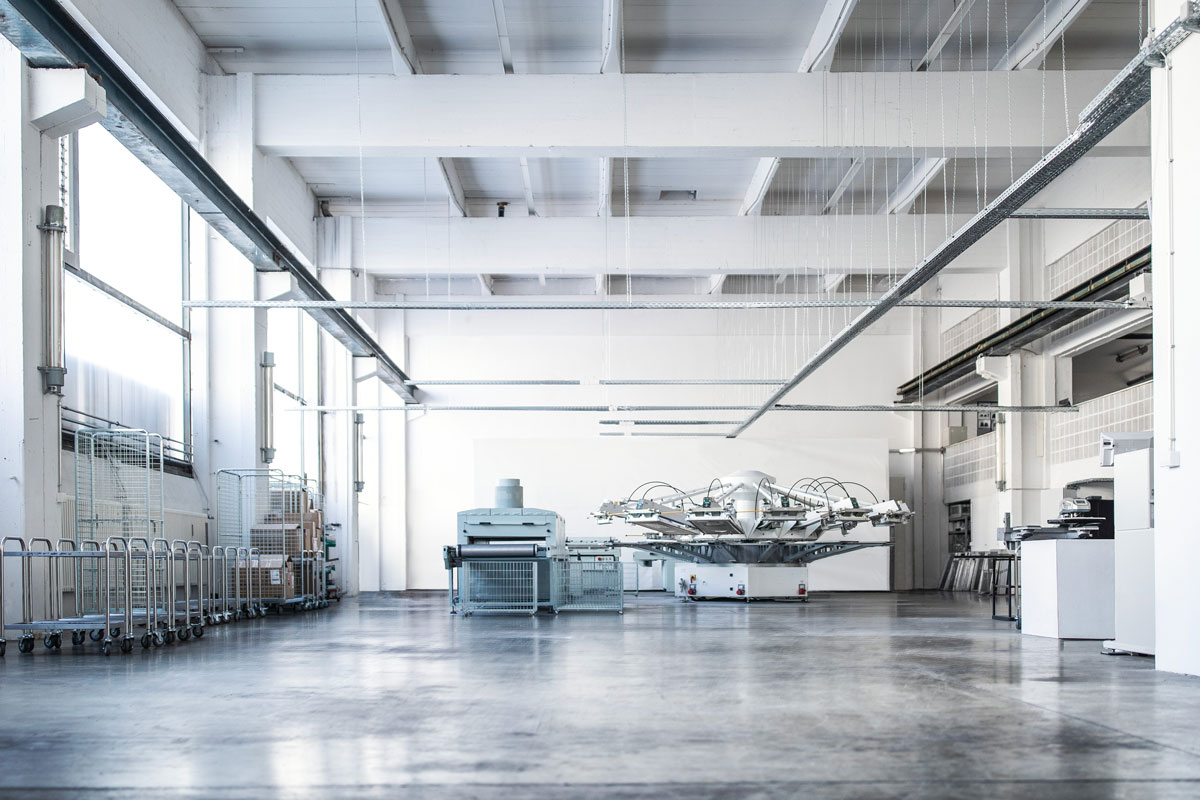
In our screen printing workshop in Munich, we carefully print individually selected textiles for you, both by hand and automatically on state-of-the-art screen printing machines. We use only the highest quality inks and carefully selected materials to guarantee the highest standards. Fine lines and perfect color reproduction are the hallmarks of this printing method – screen printing directly from our in-house workshop in the heart of Munich.
Manual screen printing in Munich
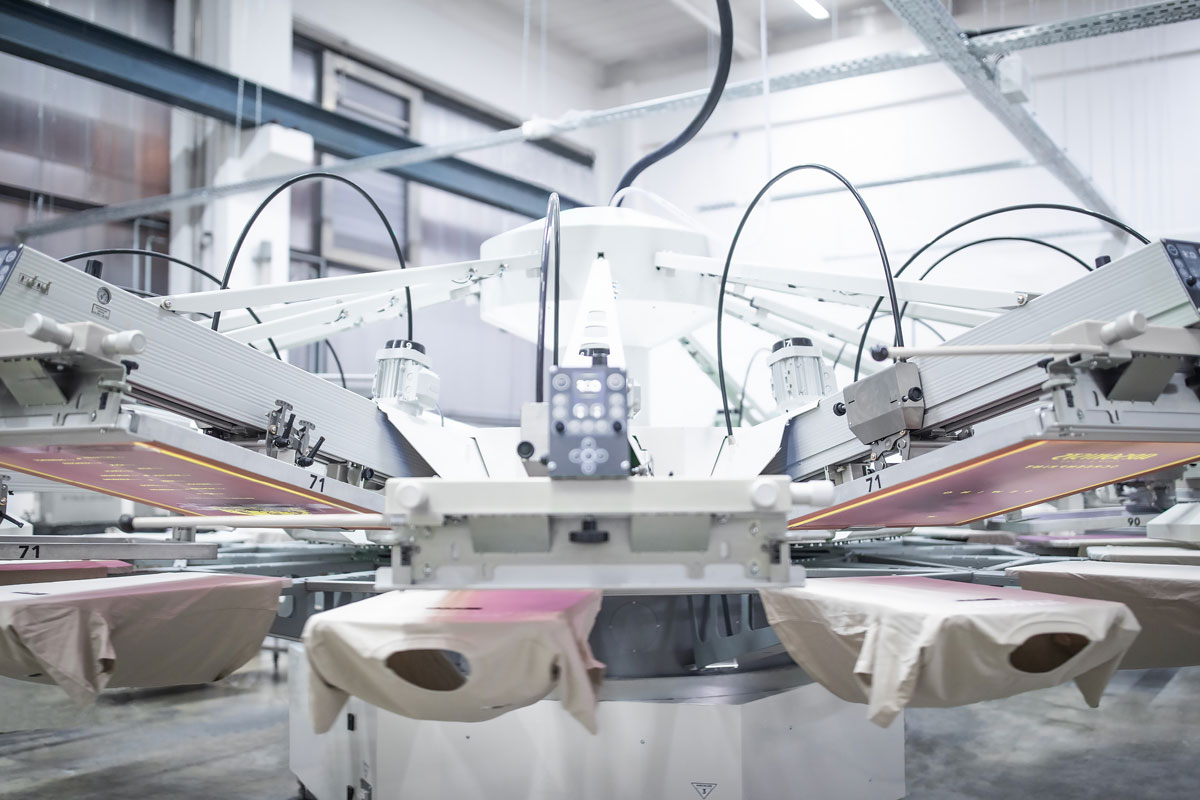
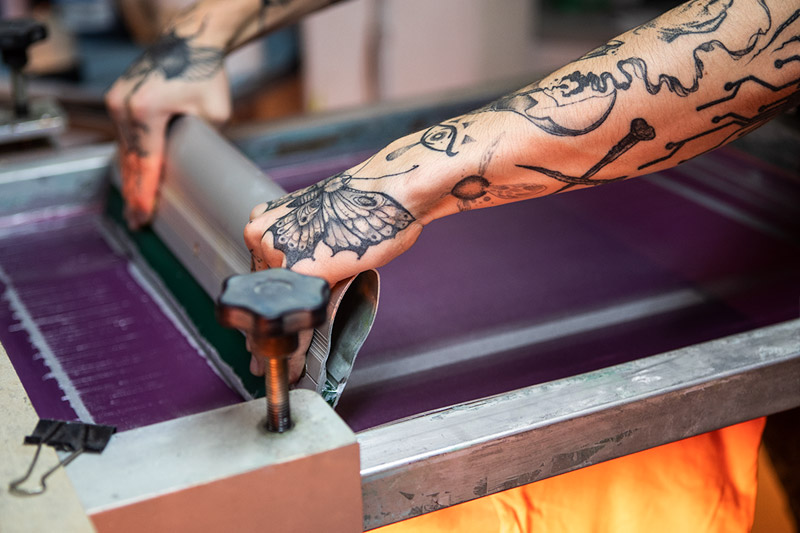
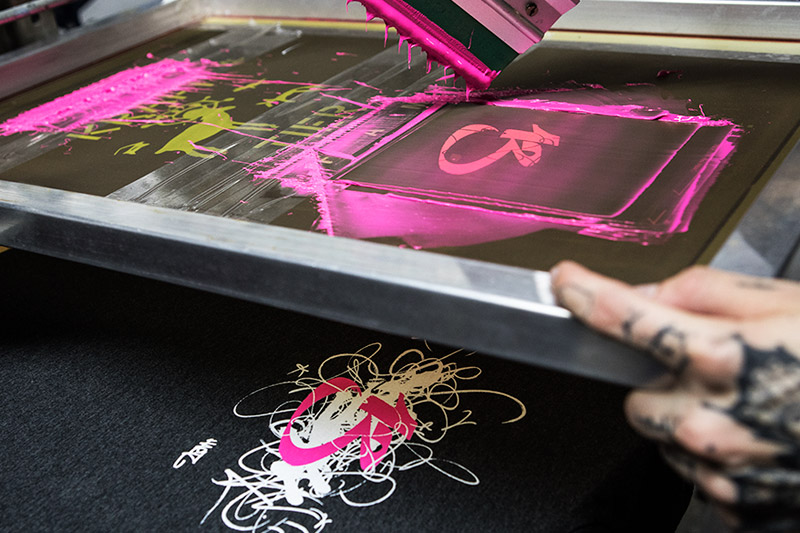
Depending on the type of screen printing, we choose between manual or automated techniques. Some experimental specialty prints can only be done by hand on a manual screen printing carousel. This allows for completely different color mixing and printing techniques on the T-shirt. With this manual screen printing process, we move away from the mainstream and impress with creative T-shirt designs.
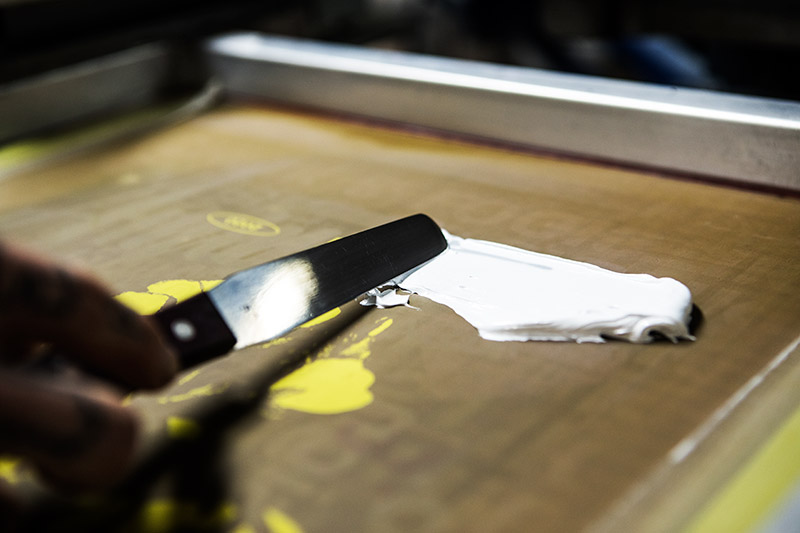
Comprehensive service including screen printing – textile printing – textile finishing – embroidery – digital printing in the heart of Munich
In addition to screen printing, we naturally offer alternative finishing techniques and other embellishment options. Depending on the required quantities and intended use, we offer digital printing , transfer printing , and embroidery in addition to screen printing . If you’re looking for the textile itself, we’ll guide you through the entire production process. We’re happy to advise you on the best colors and fabrics, such as cotton or polyester, for your project. We’ll discuss the cut and quality together in Munich.
SCREEN PRINTING EXAMPLES FROM THE SCREEN PRINTING COMPANY ARSONISTS
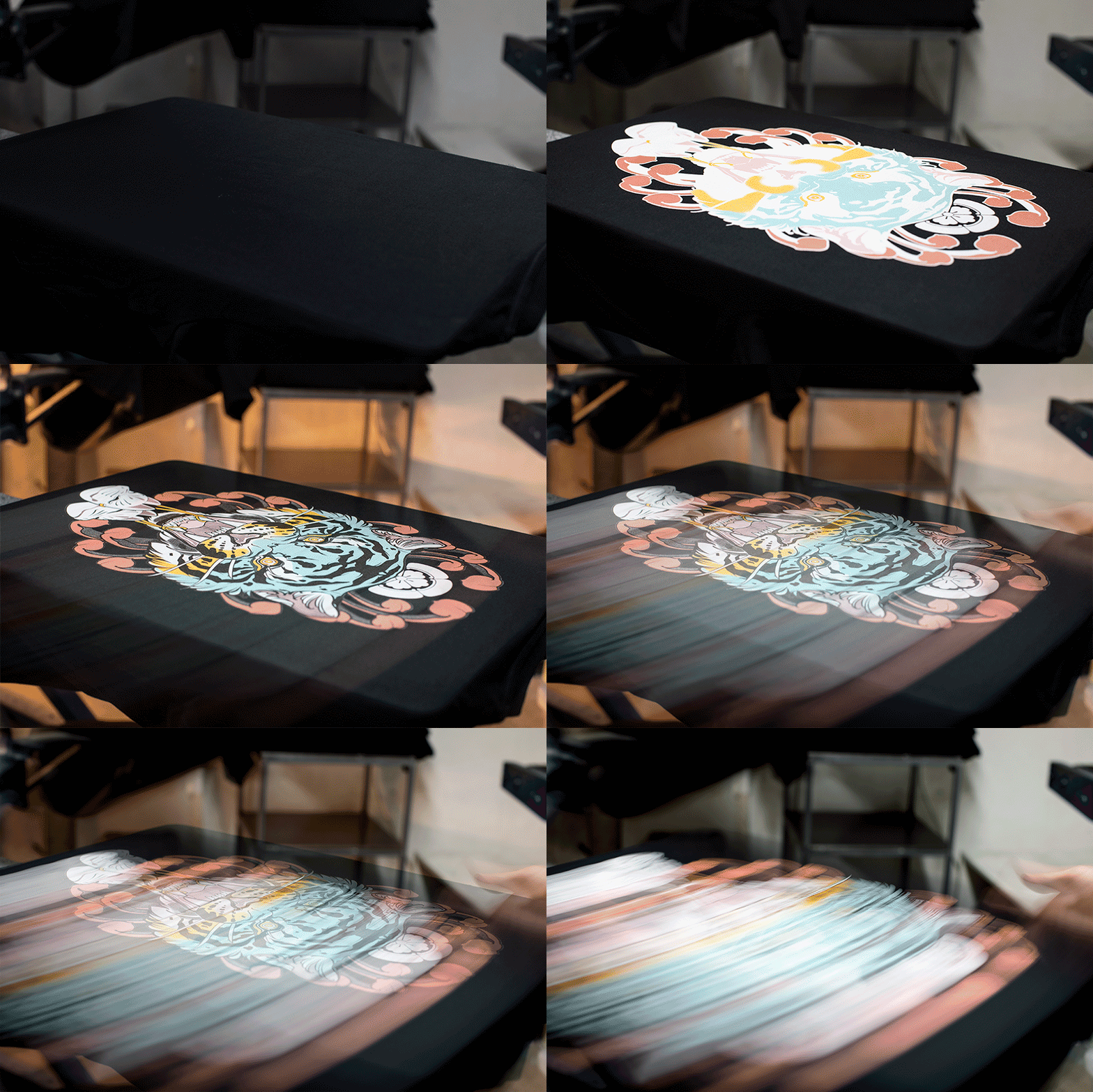
We can screen print up to 6 colors. In this example, you can see the setup of a screen print on a Fairtrade textile from Stanley Stella.
In combination – 3D screen printing with multi-color direct screen printing. Screen printing also works on heavy fabrics.
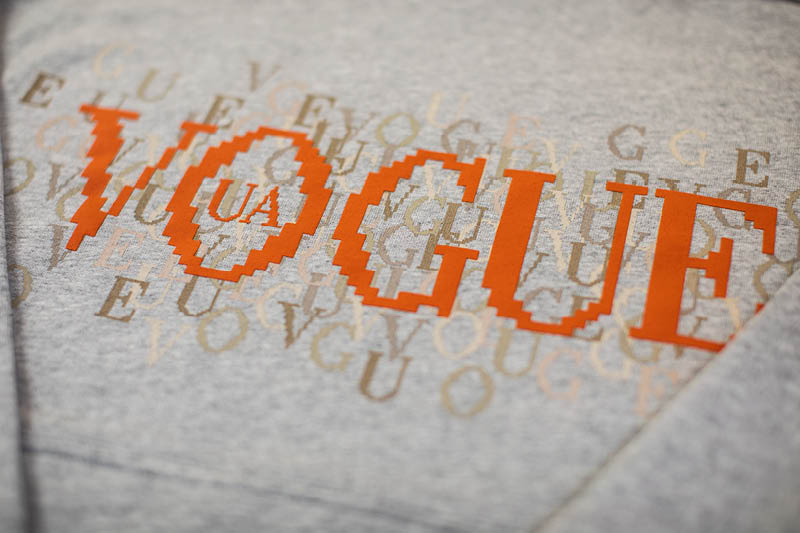
In this example, a 6-color screen print with an additional puff base was used. Details in the design can be particularly well emphasized by the three-dimensional printing.
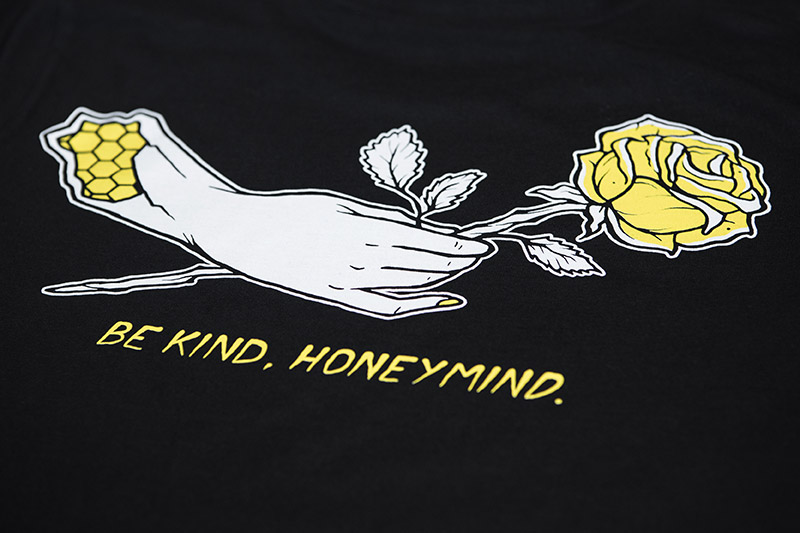
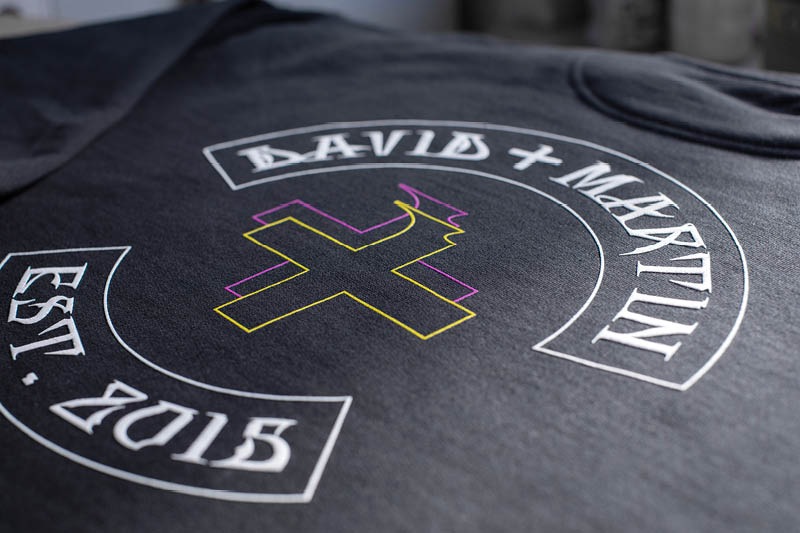
Here we have a two-color screen print on a black textile from Stanley Stella. Underprint and underprint in white + the contrasting color yellow.
Screen printing printing process, technically explained
SCREEN PRINTING MATERIAL
Years of experience in screen printing, combined with a wide range of raw materials, ensure the optimal selection of the right textile for a perfect print result. Therefore, we carefully select the appropriate raw material at the start of each order. We offer both affordable and high-quality textiles. The higher the quality of the material, the better the print result: high-quality materials have a fine weave, allowing for better reproduction of fine details.
SCREEN PRINTING PAINT
Our colors are carefully selected before screen printing, matched to the fabric, and expertly blended to guarantee a comfortable feel. We use both water-based pigment and plastisol inks. To achieve a pleasant feel even on dark fabrics, we also use discharge inks, which remove the color from the fabric. True color reproduction is paramount and something we prioritize. Plastisol and pigment inks can be mixed and printed according to solid colors such as Pantone® color values.
COLOR ACCURACY IN SCREEN PRINTING
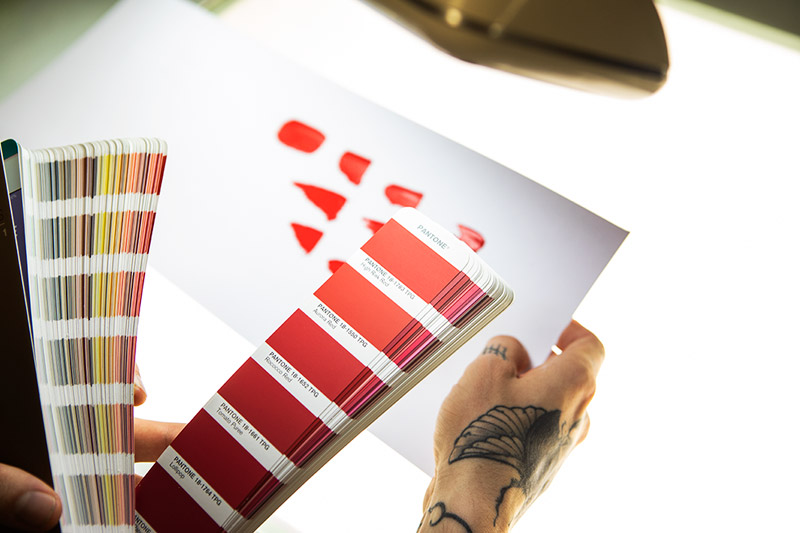
Screen printing allows for very high color accuracy. The printing ink can be mixed to match your desired solid colors according to Pantone, HKS, RAL, or CMYK.
OVERVIEW OF DIFFERENT SCREEN PRINTING COLORS
WHITE PLASTIC AND WATER-BASED PAINT
Printing white on dark textiles is possible with various ink systems, including water-based and solvent-based plastisol inks. However, the ink’s opacity is always crucial and is adjusted to the specific design. Opacity also allows for certain effects and optimal textile design. This overview illustrates different options regarding opacity.
COLORED PLASTISOL AND WATER-BASED PAINT
To perfectly apply colored ink to a dark fabric, the process is similar to printing pure white. This can be achieved either with an underprint or multiple layers of ink. Similarly, using a thin layer of ink allows you to control the opacity and create specific effects. For a perfect balance of texture and coverage, a combination of etching and regular screen printing is recommended.
DARK PLASTISOL & WATER-BASED PAINT
Black or colored printing on light-colored textiles is far less problematic than on dark garments. On light fabrics, full coverage is achieved, eliminating the need for an underprint. This influences the ink application and results in a very fine texture. If desired, a raised layer can be applied to the textile using appropriate additives to create a raised effect.
TEXTILE PRINTING – HOW IT WORKS
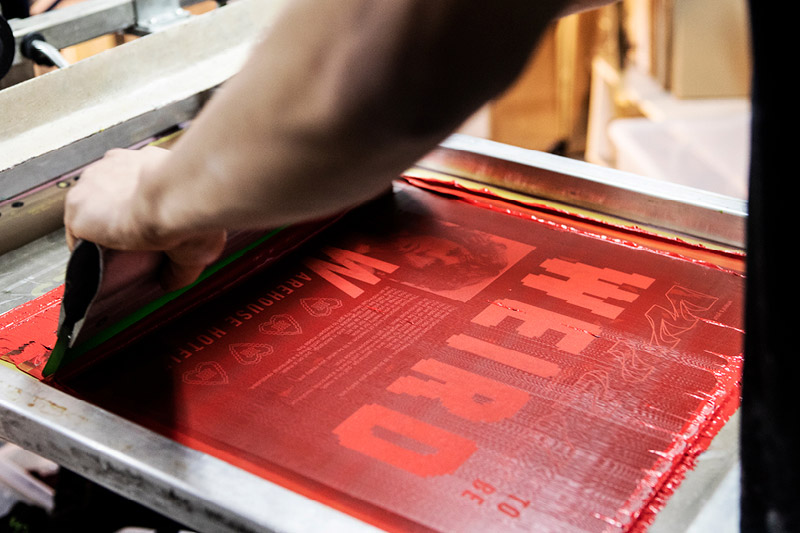
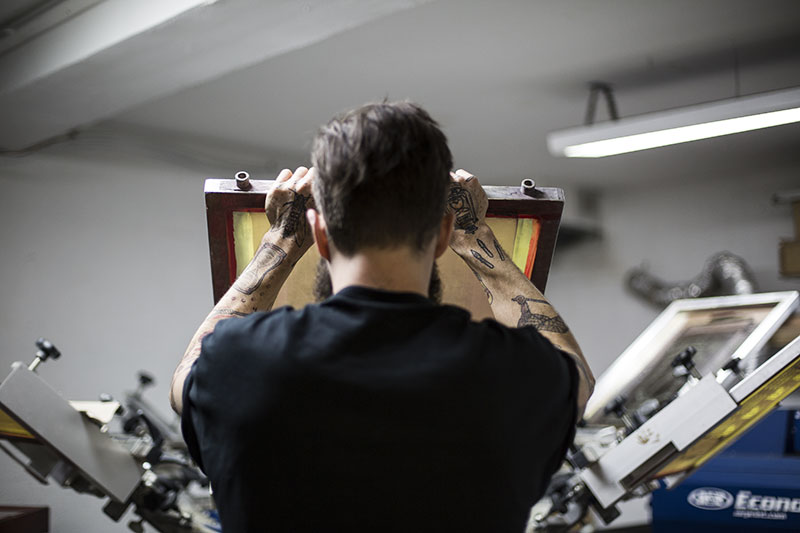
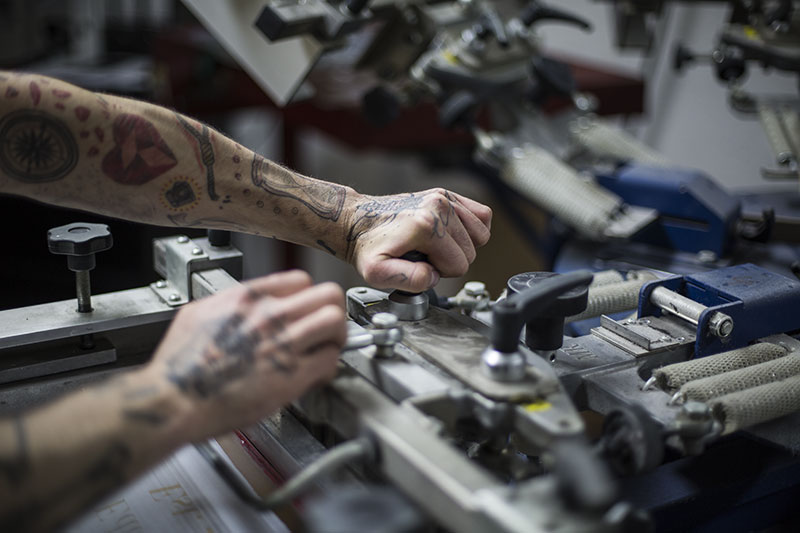
In screen printing, ink is typically forced through a screen using a squeegee. The screen is exposed with your design, and a stencil is created on the mesh. In the areas of the screen where no ink should be printed, the mesh openings are blocked by the stencil. After creating the stencils on the screen printing frame, we tension the frames in a carousel and perfectly align all the individual colors and areas. The ink is then forced through the screen with a squeegee and fixed onto the textile using a continuous dryer, or an intermediate dryer for multi-color screen printing, thus making it permanent. A multi-color design is applied to textiles or other materials in a single pass.
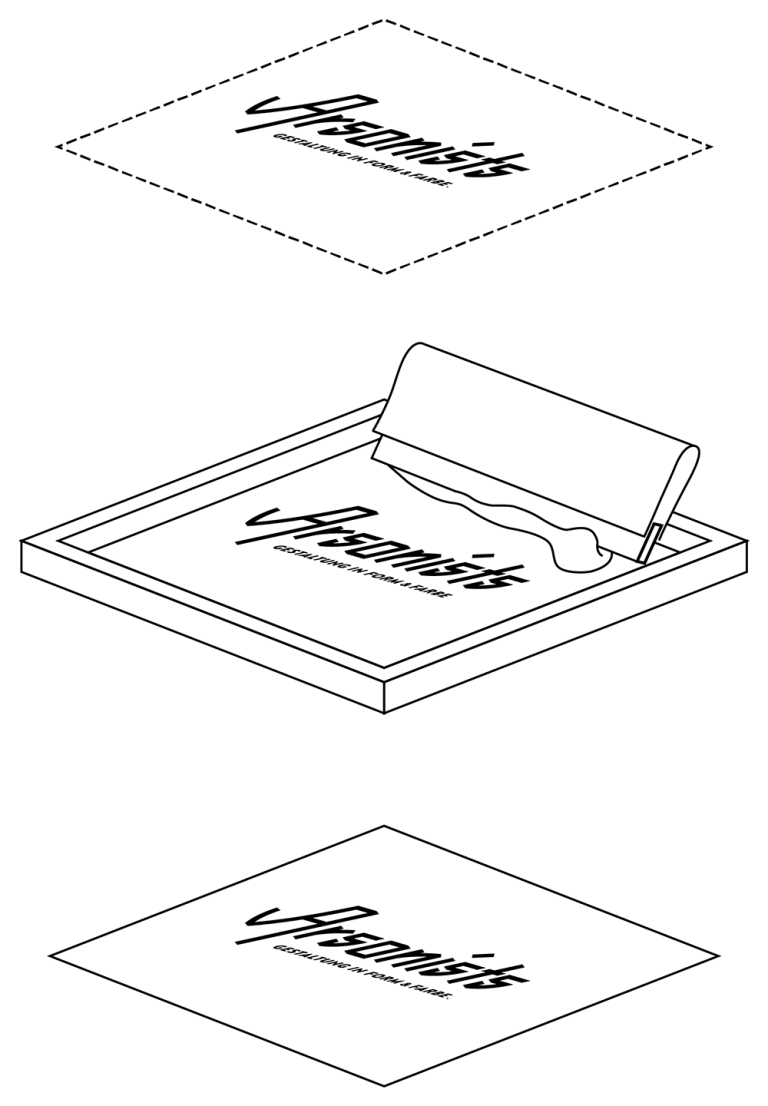
Screen printing in detail
Development slide
Black areas on the screen are not exposed.
Screen printing squeegee
Tool that forces the paint through the sieve
color used
is printed onto the textile through the screen.
screen printing frame
Unexposed areas are washed out of the light-sensitive layer, creating a “stencil” with which the design can be printed.
Textile material
will be printed with the corresponding color.
Screen printing iris printing process in Munich
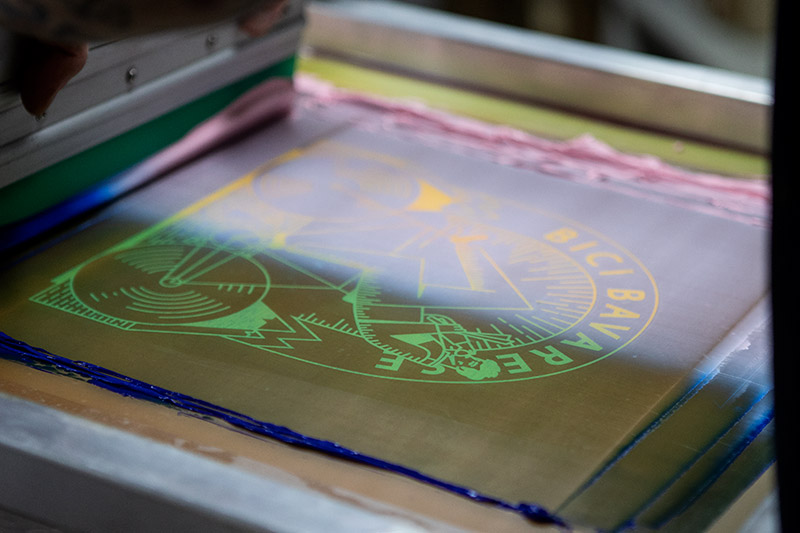
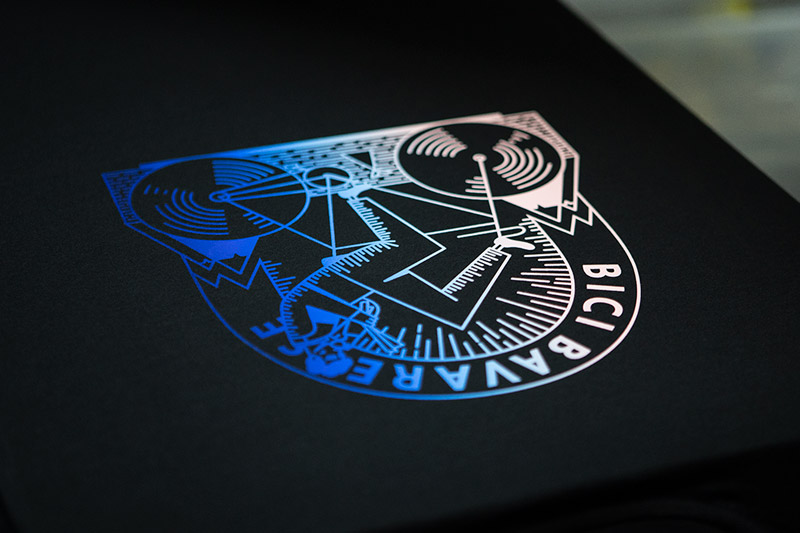
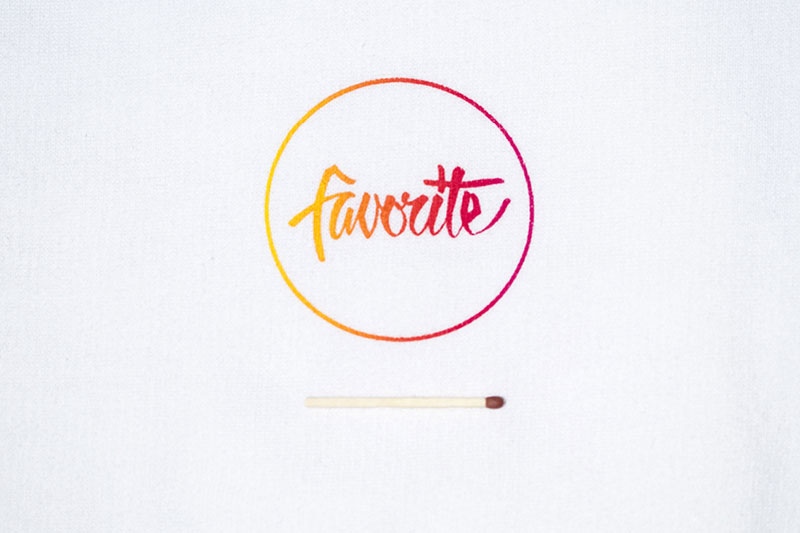
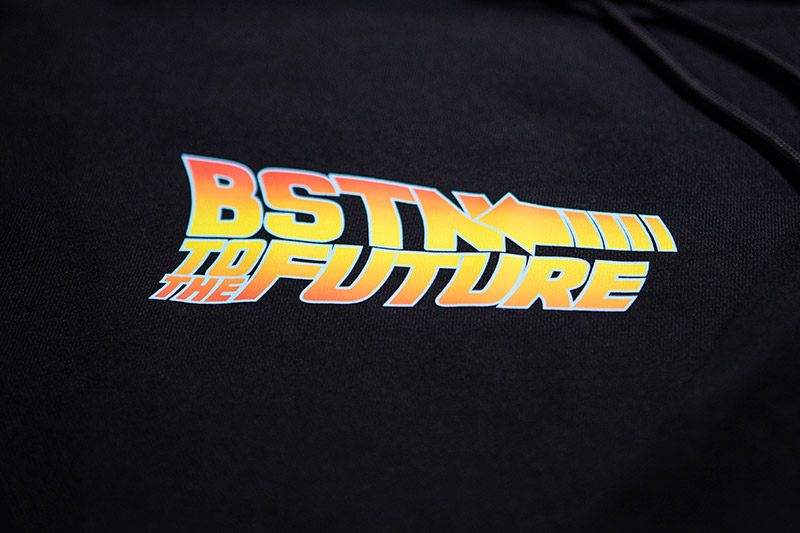
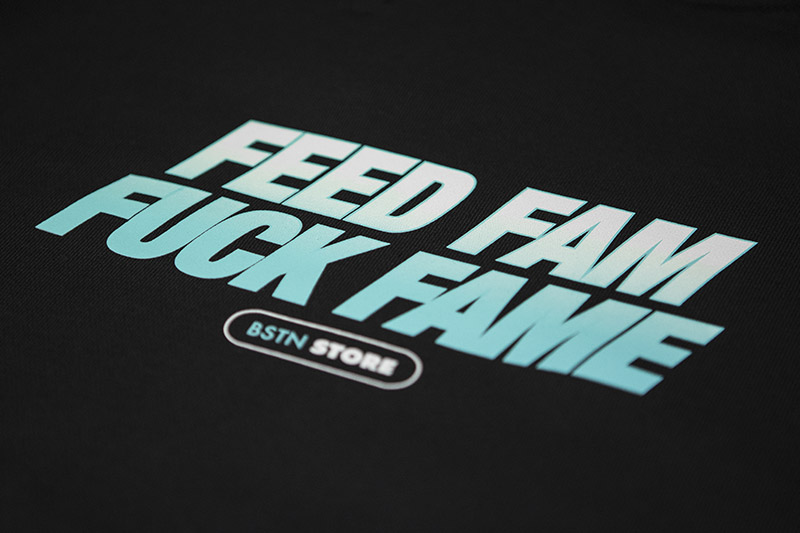
With years of experience in screen printing, our team has mastered a wide range of printing techniques. Iris printing is a special type of screen printing that always delivers visually stunning results with its rich colors. By mixing the inks directly on the screen with the squeegee, the screen printing process allows for the creation of simple or multi-colored gradients. Our printers are specialists in iris printing and will execute your color gradients with the utmost precision using the rubber squeegee.
SUPERIOR 3D SCREEN PRINTING
Additives allow for a 3D effect in screen printing, creating a raised, embossed finish on the textile. We are your partner when it comes to challenging screen printing projects.
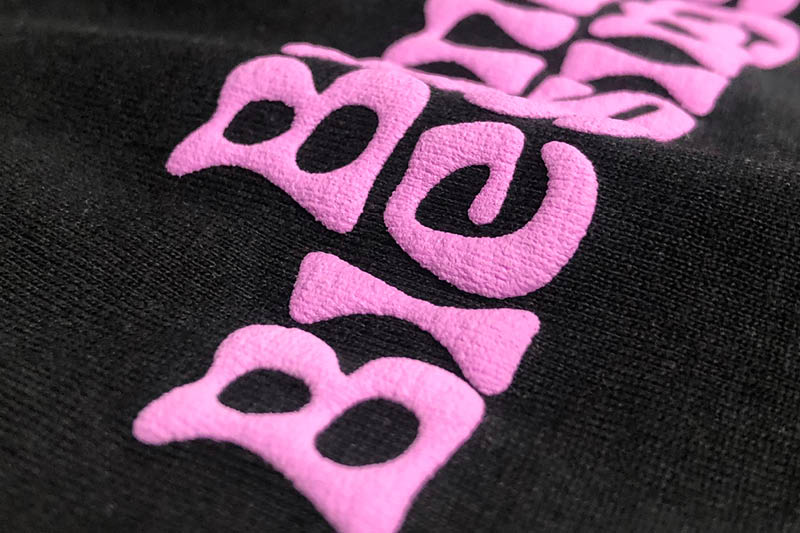
Relief printed using screen printing on a fine-mesh shirt.
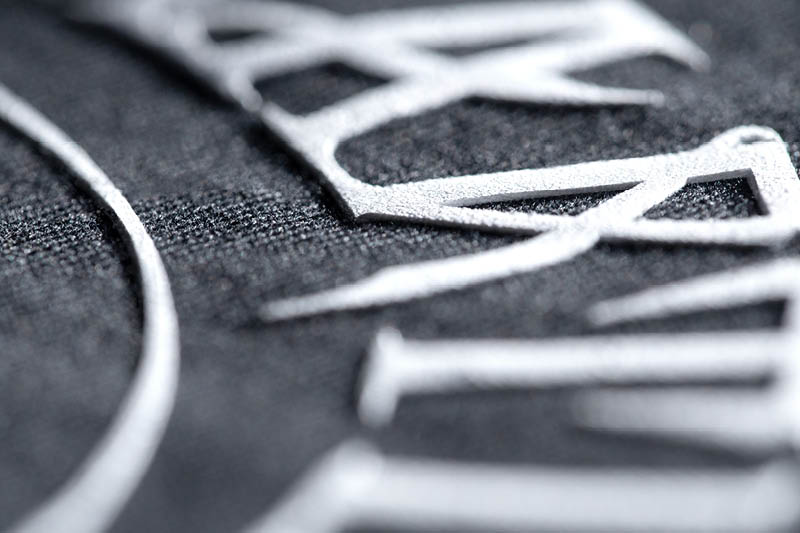
Raised prints on a 350g sweater fabric.
EFFECT COLORS IN SCREEN PRINTING
Screen printing is characterized by excellent color reproduction. In addition, there are various effect inks that can be applied to the entire surface. We would be happy to discuss the right technique with you.
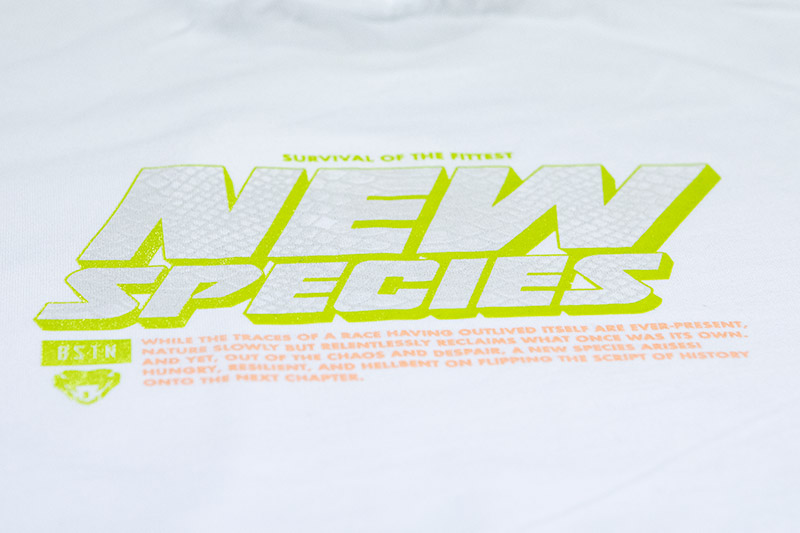
Fluorescent colors printed using screen printing. Shown here in daylight.
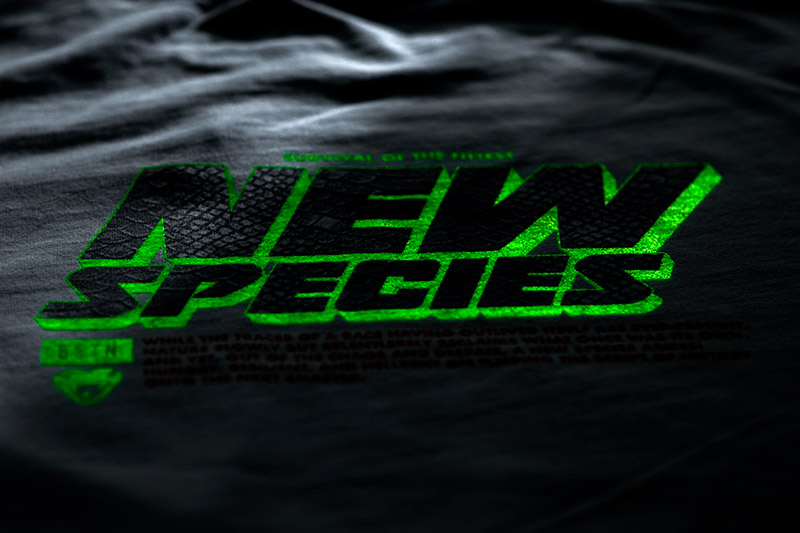
Fluorescent colors printed using screen printing. Shown here without daylight.
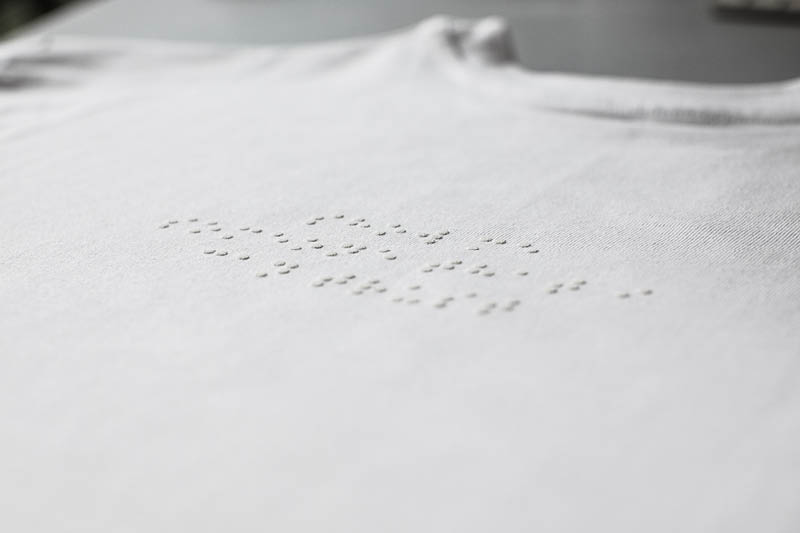
Braille printed on a shirt using screen printing.
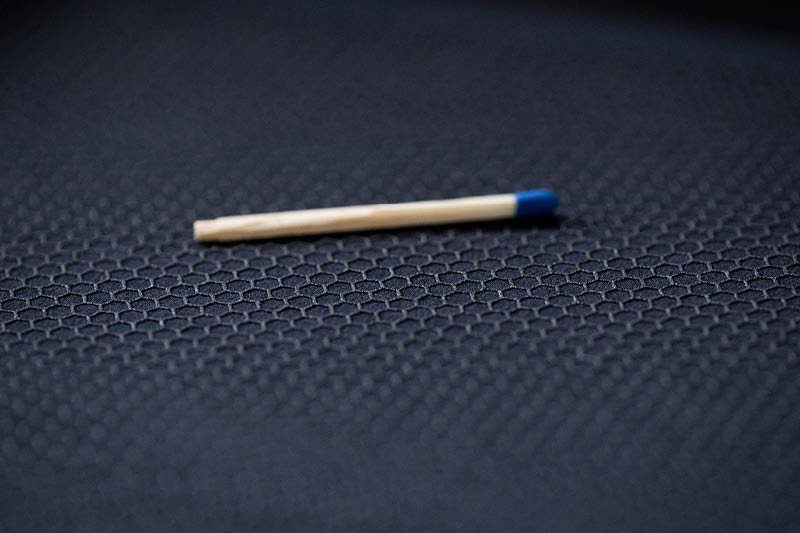
Special 3D printing for a rubberized surface on thin technical printing material.
Tone-on-tone color via screen printing
Screen printing is perfect for creating tone-on-tone prints on textiles. Screen printing impresses not only with its quality and wash resistance on all materials, but also with the widest color spectrum that can be applied to fabric. Solid printing is essential for a perfect print result.
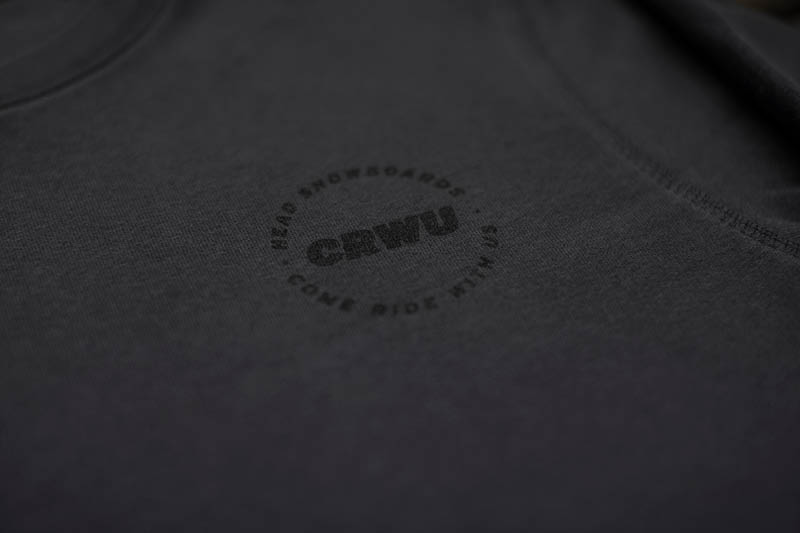
Black screen print on dark grey textiles
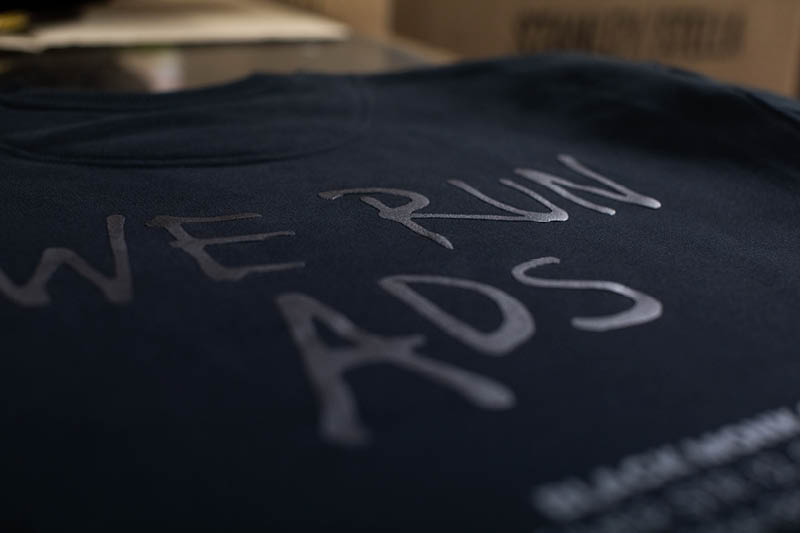
Black 3D puff print on black fabric
THE RIGHT CHOICE OF TEXTILE
To achieve a perfect print result, not only the printing method but also the fabric being printed on must be suitable. High-quality materials further enhance color reproduction and crisp lines of the design. Cotton is particularly well-suited for multi-colored shirts due to its excellent heat resistance. We are happy to help you select the right textiles, whether T-shirts, polos, sweaters, hoodies, bags, hats, etc.
Get an overview of our most frequently used textiles here.
SCREEN PRINTING ON PAPER AND OTHER MATERIALS
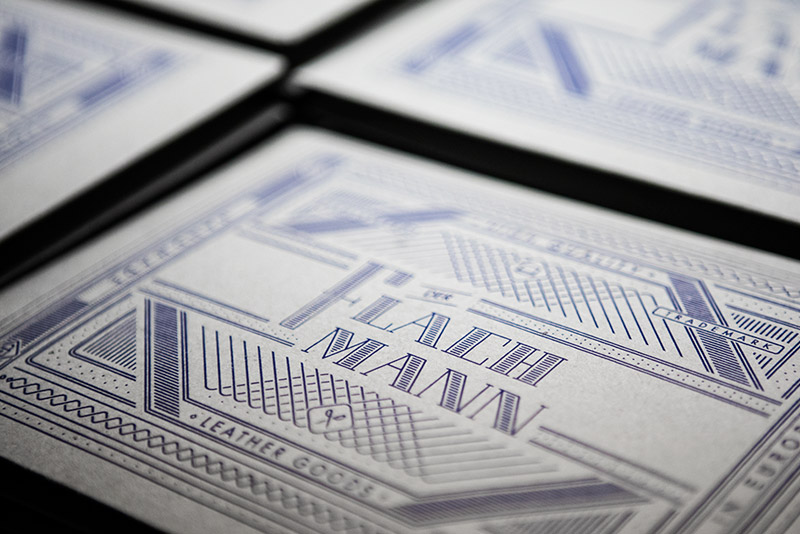
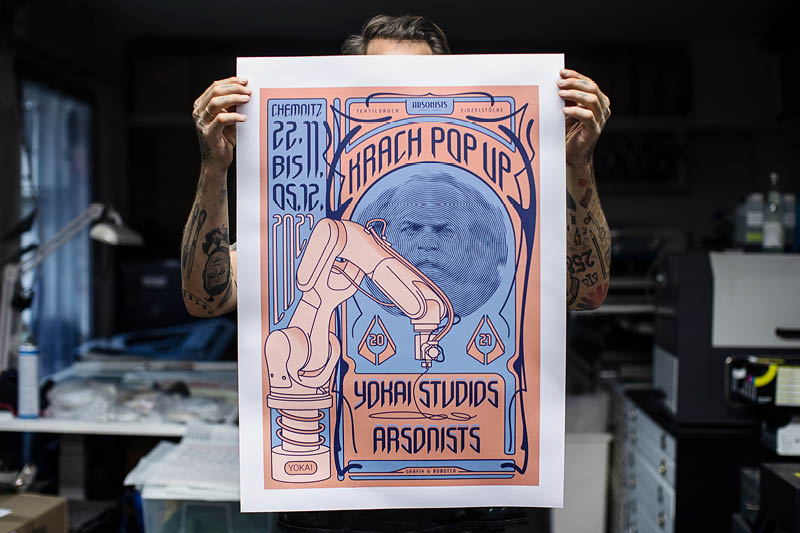
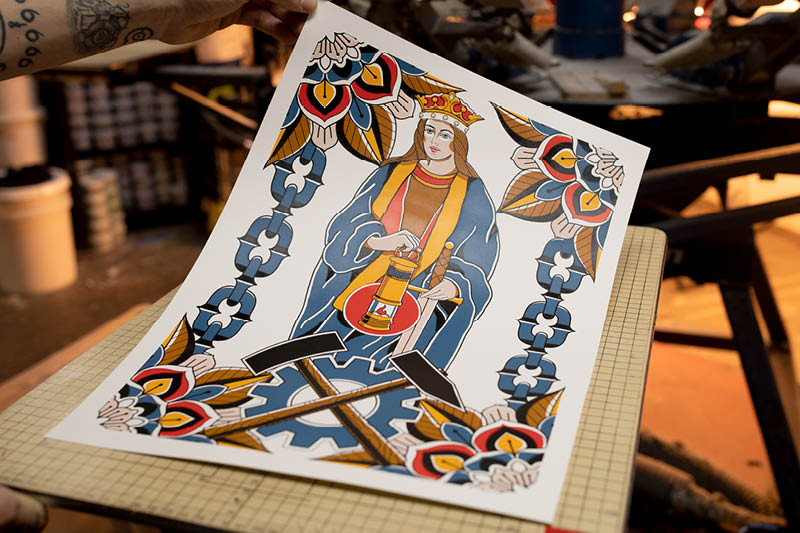
In addition to screen printing on textiles, we also offer top-quality printing on paper. Screen printing is used for posters, art prints, packaging, business cards, greeting cards, and other flat printable materials such as metal, wood, glass, ceramic, or custom promotional items. Posters can be printed in standard formats up to A2+ or A1. Paper printing is particularly well-suited for projects that require dark substrates or special colors. Screen printing offers the highest possible quality and delivers exceptional color brilliance.
Do you also offer screen printing workshops in Munich?
Yes, of course, we offer courses for groups and workshops for corporate events. Register your entire company in advance. You can find more information about our textile workshops here . We also offer external workshops with a mobile setup outside of Munich. Whether it’s an event or a trade fair, our creative team will support you from start to finish. Register now to participate.
Screen printing on textiles – Is screen printing actually the right technology for me as a customer?
We select the appropriate finishing technique based on your printing specifications. If screen printing is not the right technique due to the print run or the number of colors, we will gladly recommend other suitable options tailored to your quantity and printing process.
What are the advantages of embroidery compared to screen printing?
Generally, one of the main differences between embroidery and screen printing is the feel and appearance. Both printing methods are wash-resistant and can achieve similar effects. Feel free to contact our team and we’ll find the optimal printing techniques for you.
What can I have printed at Arsonists in Munich?
We print on all kinds of textiles. Whether it’s T-shirts, hoodies, bags, caps, etc., we offer a full range of finishing options. We’ll also find the perfect color and materials to suit your project. Depending on the intended use, cotton or blended fabrics are suitable for printing. Contact our customer service team and we’ll advise you on the best way to bring your design to life.
Screen printing vs. digital printing?
For larger print runs, screen printing is always the best option. However, for smaller print runs or designs with a high number of colors, digital printing is more suitable. Screen printing is very time-consuming to set up, which is reflected in the price, especially for small print runs. Digital printing allows for small production runs starting at just 10 pieces. Screen printing is particularly well-suited for designs with a low number of colors, allowing for cost-effective printing. For example, a photograph is better reproduced using digital printing, as the number of colors is less of a factor.
Where is your textile printing company in Munich?
Our screen printing workshop is located in Sendling. We have our entire production process on-site and a showroom with our textile range. We’d be happy to show you T-shirts, hoodies, accessories, and countless other textiles by appointment.
Directions to the Arsonists screen printing company?
If you’re from the Munich area, it’s easy to visit us. You can drive directly from home; we have parking spaces right in front of our location. Alternatively, you can use Munich’s public transport and get off at Brudermühlstraße. From there, it’s just a short walk to our screen printing workshop.
How long are the delivery times usually?
Our standard delivery time is 5-10 business days after order confirmation. However, we also offer express options with delivery within 3 or 5 business days. Contact us for more details or find out more here .
Advantages of screen printing over embroidery
One of the biggest advantages of screen printing over embroidery is its speed. While a single embroidery step can take minutes, screen printing, especially with automated screen printing, can be done in seconds. This makes screen printing particularly suitable for high-volume production in textile printing. Embroidery, on the other hand, is easier to handle for smaller quantities.
What about colors in screen printing?
Screen printing always uses solid colors. This results in a uniform, even print. Areas within a design can generally be reproduced in any imaginable color. Screen printing inks are particularly vibrant and can also be used as special colors. Neon, metallic, and even phosphorescent colors are possible with screen printing. We would be happy to review your design together and determine the best option.
How does ink actually get through the screen in screen printing?
In screen printing, ink is forced through a mesh screen stretched within a screen printing frame using a squeegee. The stencil created on the frame is used to press the ink onto the fabric. Screen printing is a printing process that can be done manually or automatically. It is frequently used in textile printing because not only can the ink application be precisely controlled, but special colors can also be printed. At our screen printing shop, we offer you all conceivable finishing methods for any print run.
What is the right printing method for me?
There’s generally no right or wrong answer, but several factors are crucial when choosing the right printing method. It mainly depends on the number of colors in the design. This directly impacts the price and is essential for efficient print production. We offer a full range of finishing options for textile printing and will work with you to find the best solution. For large print runs, screen printing is often the best choice. For smaller quantities, digital printing is usually the preferred method. We are your expert partner when it comes to optimizing your textiles.
What can I print on my T-shirt?
We print your desired design on any T-shirt. Whether you want to use it as promotional material or have a photo, logo, or elaborate design printed, we can do it. In our screen printing shop, we produce each piece by hand, in small batches for sampling or in large-scale production. Simply send us a photo of the design you want printed, and we’ll discuss all the options.