
Siebdruck München – T-Shirt & Textilien bedrucken lassen
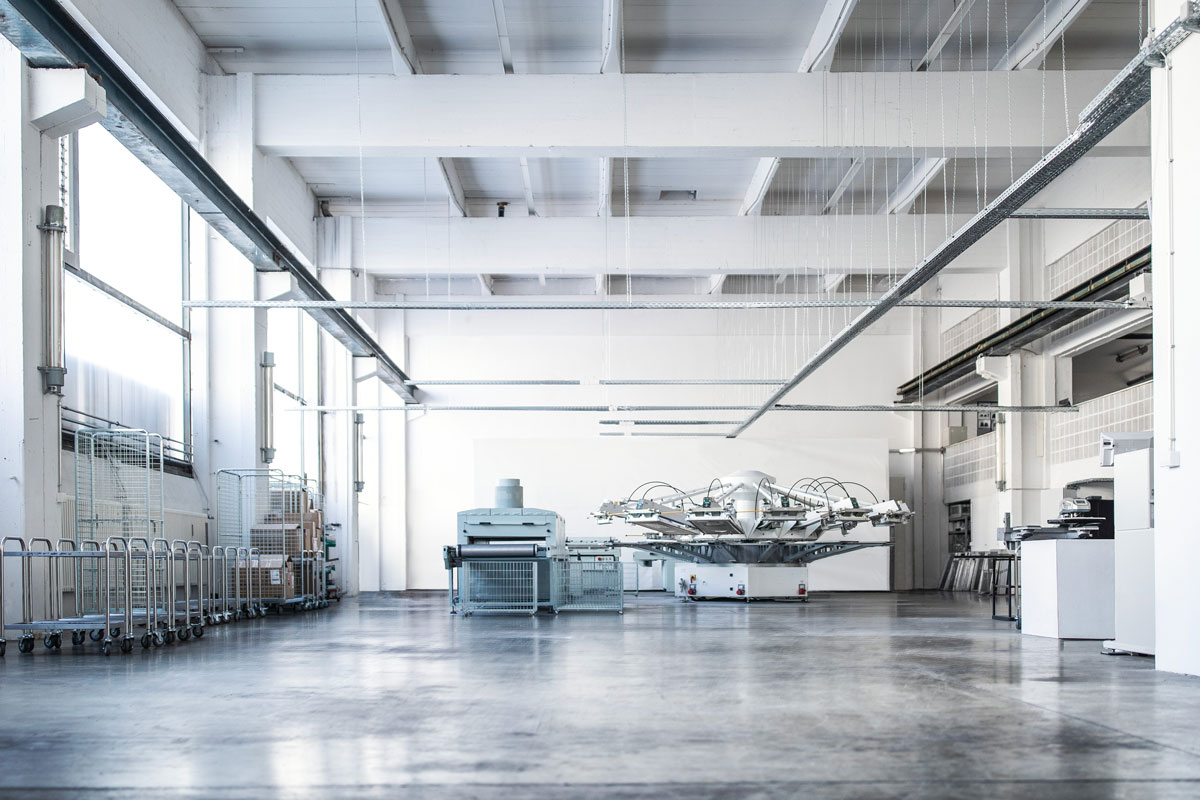
In unserer Siebdruckerei in München bedrucken wir individuell für dich ausgewählten Textilien sorgfältig per Hand und automatisiert auf den technisch besten Siebdruck Maschinen. Dazu verwenden wir nur hochwertigste Farben und verlesenes Material um den höchsten Qualitätsstandard zu gewährleisten. Feine Linie und perfekte Farb-Wiedergabe zeichnen die Druckart besonders aus – Siebdruck direkt aus der in house Siebdruckwerkstatt im Herzen von München.
Manueller Siebdruck in München
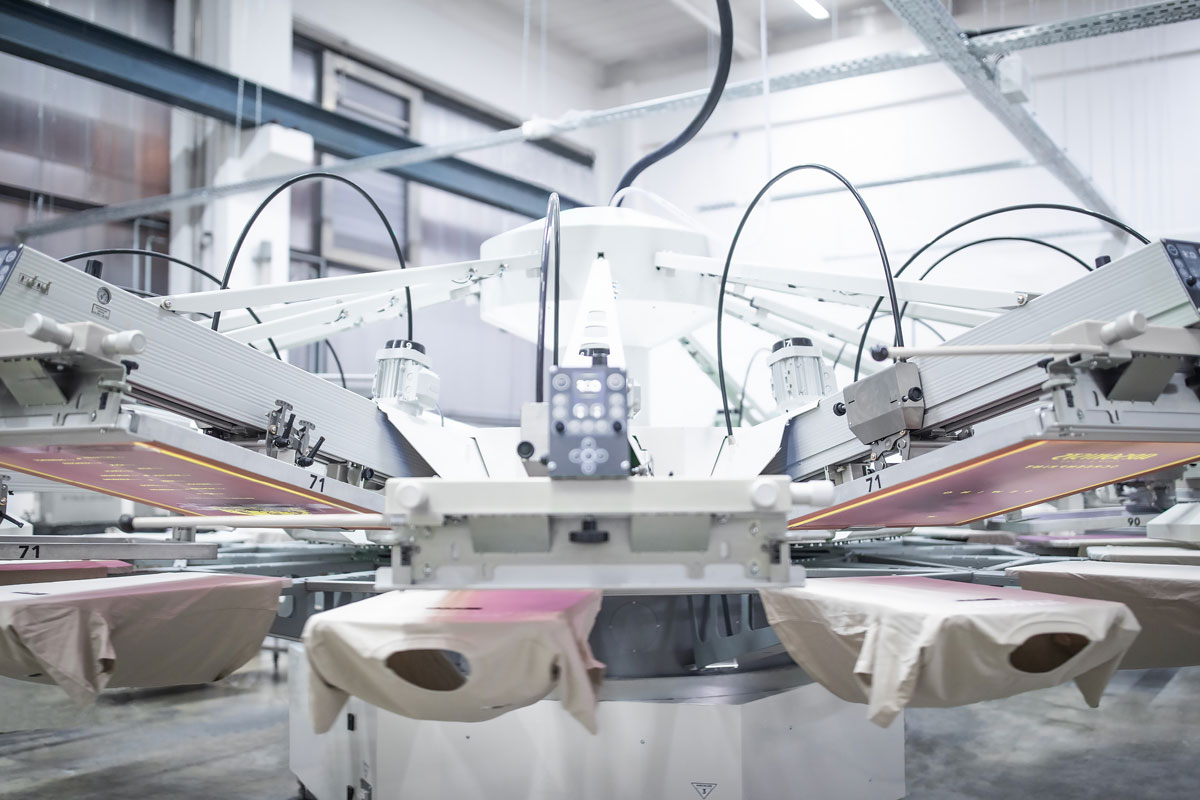
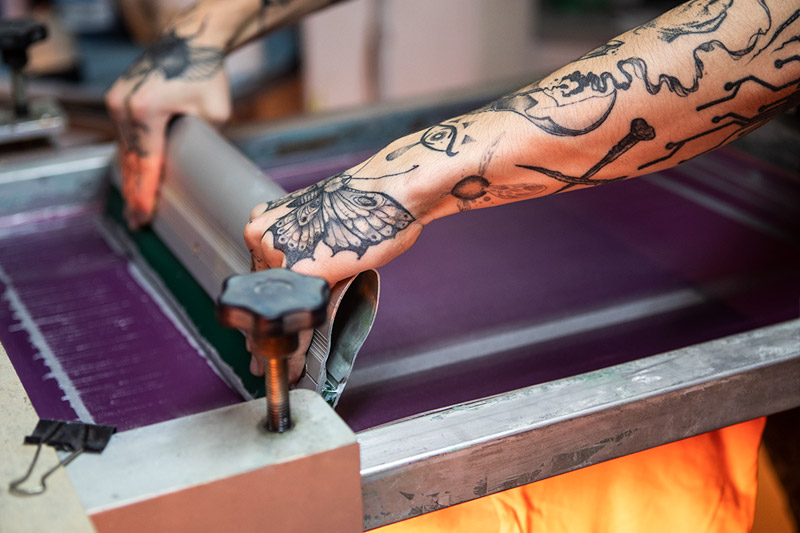
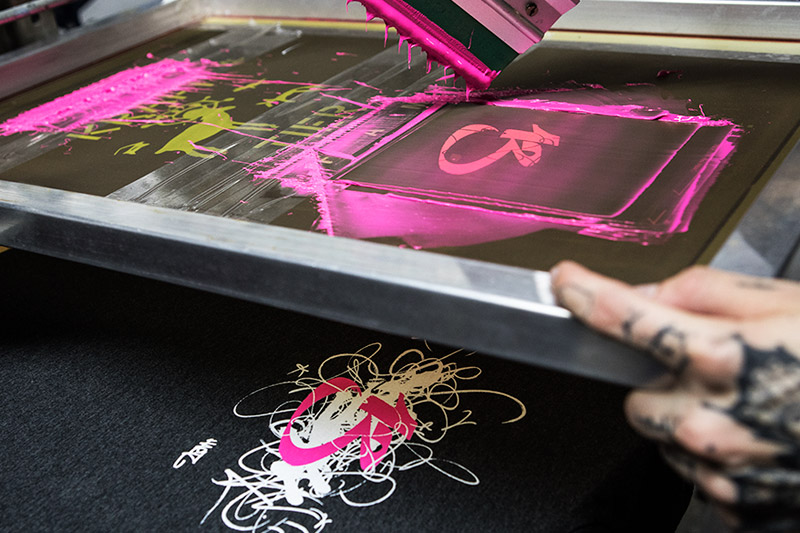
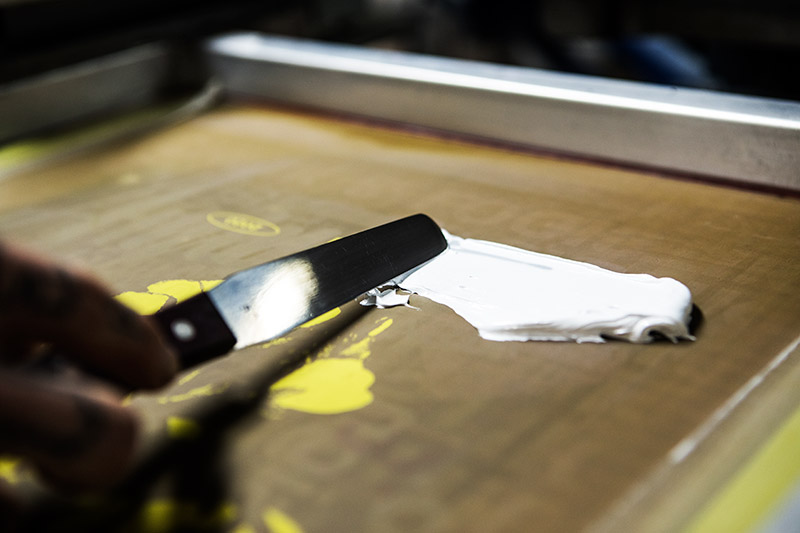
Je nach Art des Siebdruck wählen wir zwischen manueller oder automatisierter Technik. Einige experimentelle Spezialdrucke sind nur per Hand auf einem manuellen Siebdruck – Karussell zu drucken. Farbe kann hier ganz anders vermischt werden und auf das T-Shirt bedruckt werden. In diesem manuellen Siebdruckverfahren bewegen wir uns weg von der Masse und überzeugen mit kreativen Umsetzungen von Shirts.
Rundumservice mit Siebdruck – Textildruck – Textilveredelung – Stick – Digitaldruck im Herzen Münchens
Neben dem Siebdruck Druckverfahren bieten wir dir natürlich zur Weiterverarbeitung Alternativen und andere Veredlungstechniken an. Je nach benötigten Stückzahlen und Einsatzgebiet bieten wir neben Siebdruck auch Digitaldruck, Transferdruck und Stick. Sollte es um das Textil selbst gehen begleiten wird dich komplett durch eine Produktion der gewünschten Textilien. Hierbei beraten wir dich gerne welche Farbe, Gewebe wie Baumwolle oder Polyester du am besten für dein Textil verwendest. Schnitt und Qualität stimmen wir gemeinsam in München ab.
SIEBDRUCK BEISPIELE AUS DER SIEBDRUCKEREI ARSONISTS
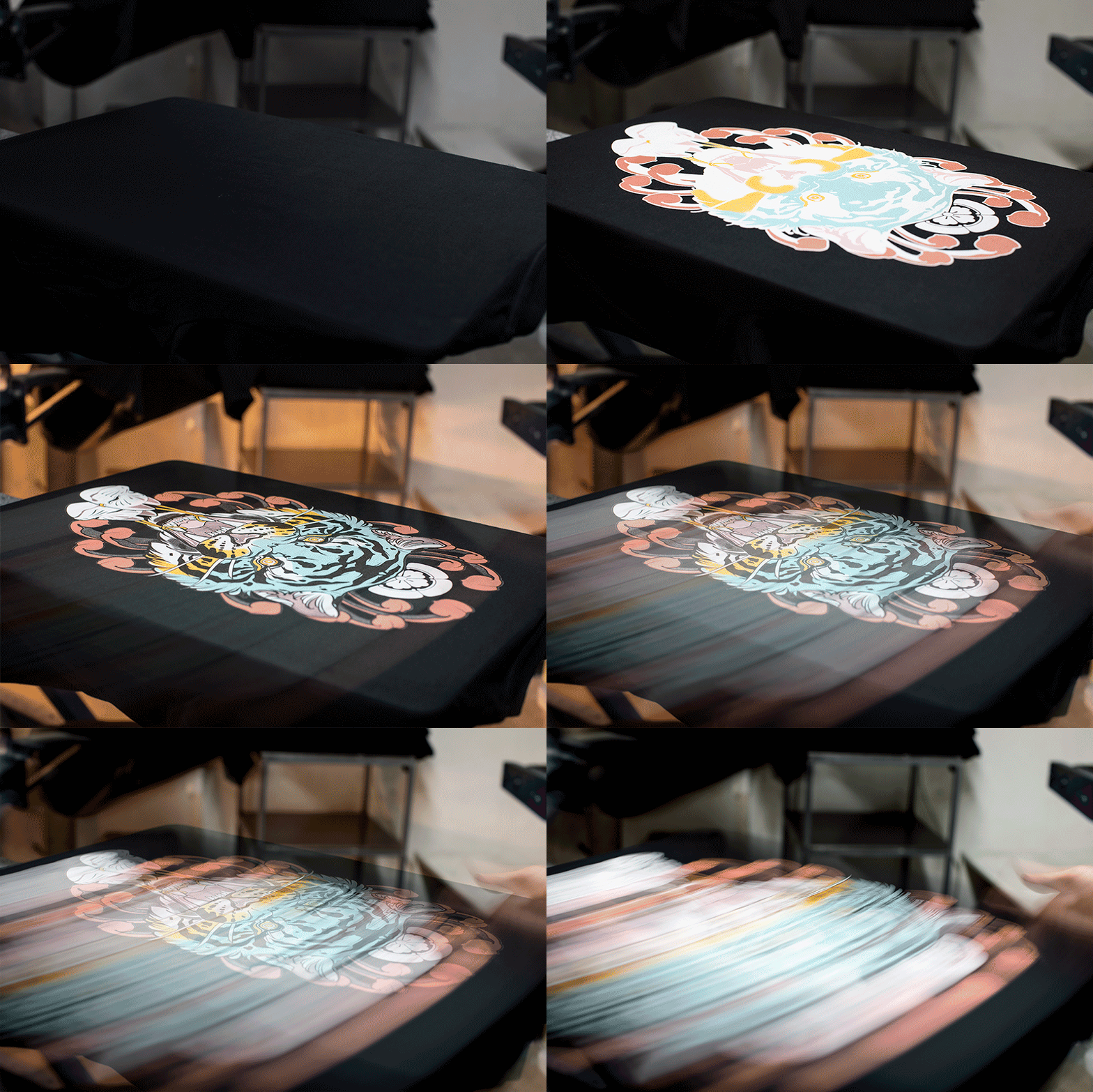
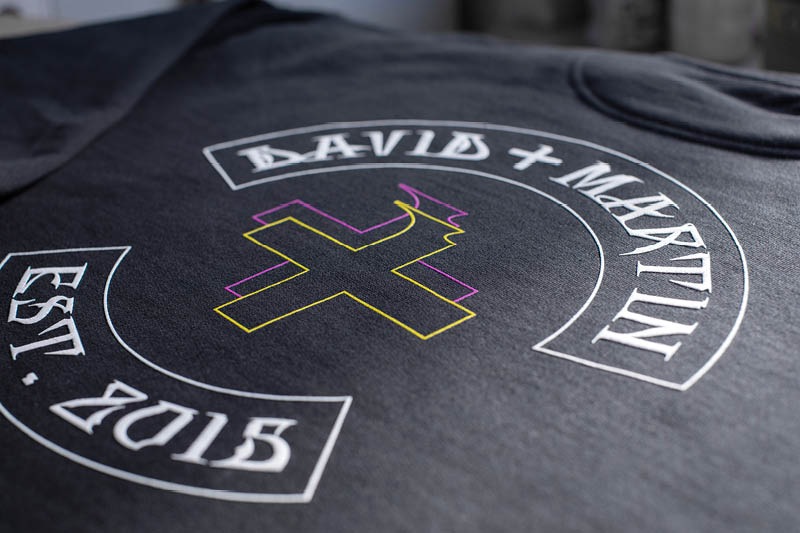
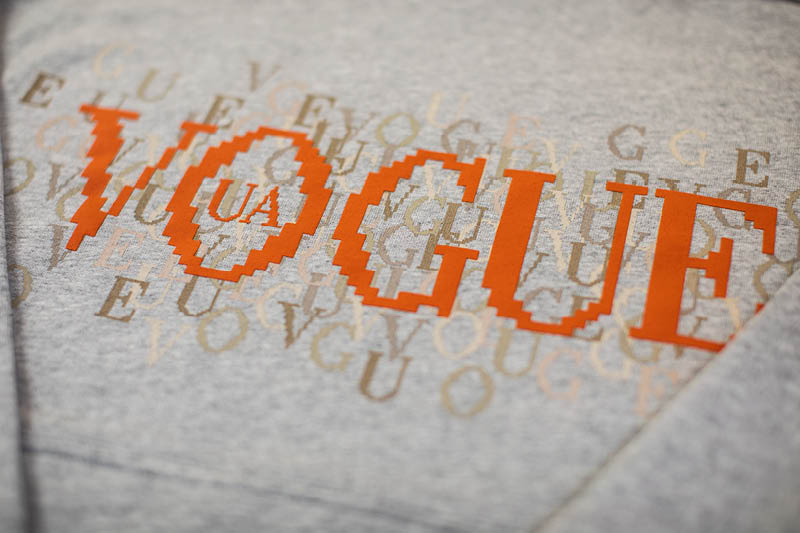
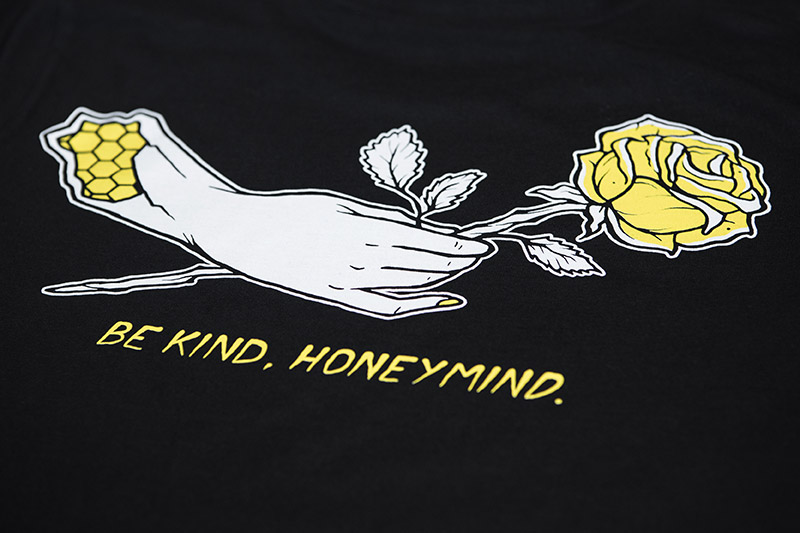
In Kombination – 3D Siebdruck mit mehrfarbig direktem Siebdruck. Siebdruck funktioniert natürlich auch auf schweren Stoffen.
Siebdruck Druckverfahren technisch beleuchtet
SIEBDRUCK MATERIAL
Eine langjährige Erfahrung im Siebdruck, einer großen Bandbreite an Rohmaterialien, gewährleistet die optimale Auswahl des passenden Textils, um ein perfektes Druckergebnis zu erzielen. Bei Beginn eines Auftrags suchen wir deshalb das passende Rohmaterial sorgfältig aus. Wir bieten sowohl günstige, als auch hochwertige Textilien an. Je höher die Qualität des Materials ist, desto besser ist auch das Druckergebnis: Materialien mit hoher Qualität haben feinmaschiges Gewebe und so können auf ihnen feine Details besser wiedergegeben werden.
SIEBDRUCK FARBE
Unsere Farben werden sorgfältig vor dem Siebdruck ausgewählt, auf das Textil abgestimmt und bestmöglich eingearbeitet um eine angenehmen Tragekomfort auf den Textilien zu garantieren. Wir verwenden sowohl wasserbasierte Pigmentfarben als auch Plastisolfarben. Um auch auf dunklen Textilien eine angenehme Haptik zu erhalten drucken wir dazu mit Ätzfarben (Discharge), die dem Gewebe die Farbe entziehen. Die farbechte Wiedergabe spielt eine große Rolle auf die wir viel Wert legen. Plastisolfarben und Pigmentfarben können nach Volltonfarben wie Pantone® Farbwerten gemischt und gedruckt werden.
FARBGENAUIGKEIT IM SIEBDRUCK
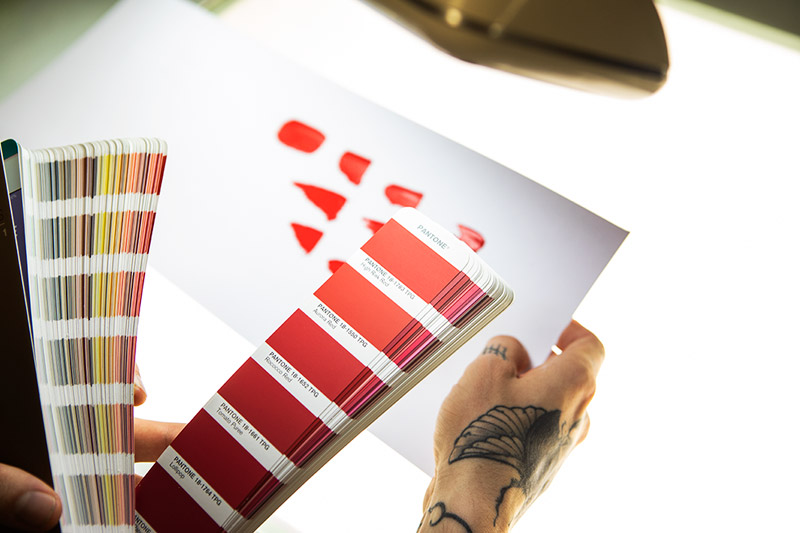
Im Siebdruckverfahren ist es möglich eine sehr schöne Farbgenauigkeit zu erzielen. Die Druckfarbe kann konform zu deinen gewünschten Volltonfarben nach Pantone, HKS, RAL oder CMYK angemischt werden.
ÜBERSICHT VON VERSCHIEDENEN SIEBDRUCK FARBEN
WEISSE PLASTIOSL- UND WASSERFARBE
Der Druck von Weiß auf dunkle Textilien ist mit verschiedenen Farbsystemen möglich. Darunter wasserbasierte Farben und lösemittelhaltige Plastisol Farben. Wichtig jedoch ist immer die Deckkraft der Farbe, die in den gegebenen Fällen auf das Design angepasst wird. Durch die Deckkraft hat man ebenso die Möglichkeit gewisse Effekte zu erzielen und das Textil bestmöglich zu gestalten. In dieser Übersicht veranschaulichen wir verschiedene Möglichkeiten im Bezug auf Deckkraft.
FARBIGE PLASTISOL- UND WASSERFARBE
Um eine farbige Deckung auf ein dunkles Textil perfekt umzusetzen funktioniert dies wie beim reinweißen Druck. Entweder mit einem Unterdruck oder mit einem mehrfachem Druck. Ebenso kann man mit einem geringen Farbauftrag die Deckkraft steuern und gewisse Effekte erzielen. Um ein perfektes Ergebnis im Zusammenspiel von Haptik und Deckung zu erhalten empfiehlt sich ein Mischung von Ätzdruck und regulärem Siebdruck.
DUNKLE PLASTISOL- & WASSERFARBE
Der schwarze bzw. farbige Druck auf helle Textilien ist weit unproblematischer wie auf Dunklen Kleidungsstücken. Auf hellen Gewebe hat man volle Deckung und es muss nicht untergedruckt werden. Dies beeinflusst den Farbauftrag und man erhält eine sehr feine Haptik. Man kann hier wenn gewünscht aber mit entsprechenden Zusatzstoffen eine erhabene Schicht auf das Textil bringen um einen erhabenen Effekt zu erzielen.
TEXTILDRUCK – SO FUNKTIONIERT’S
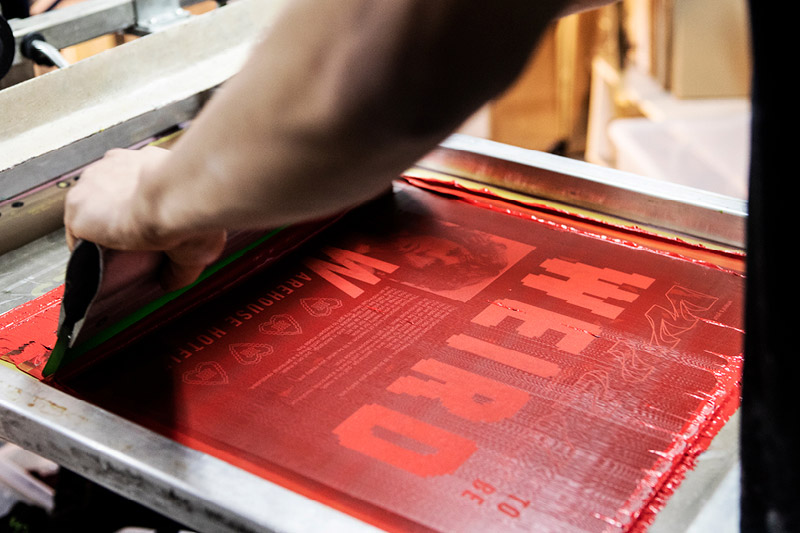
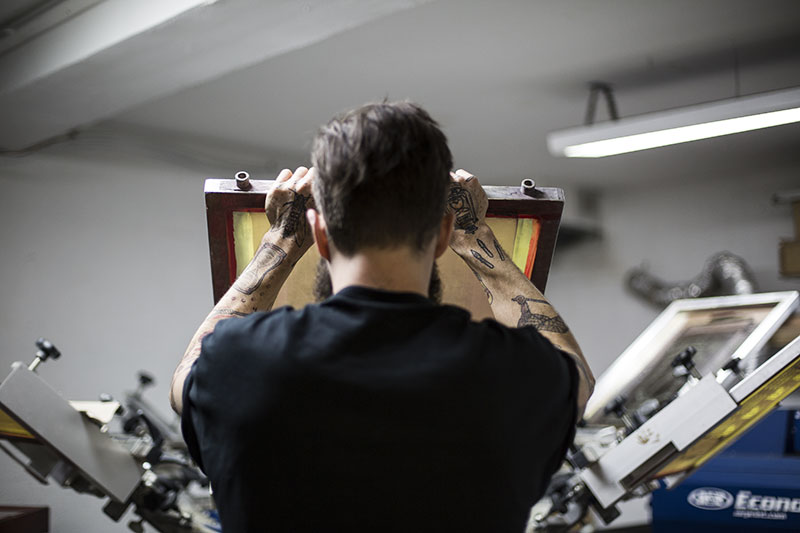
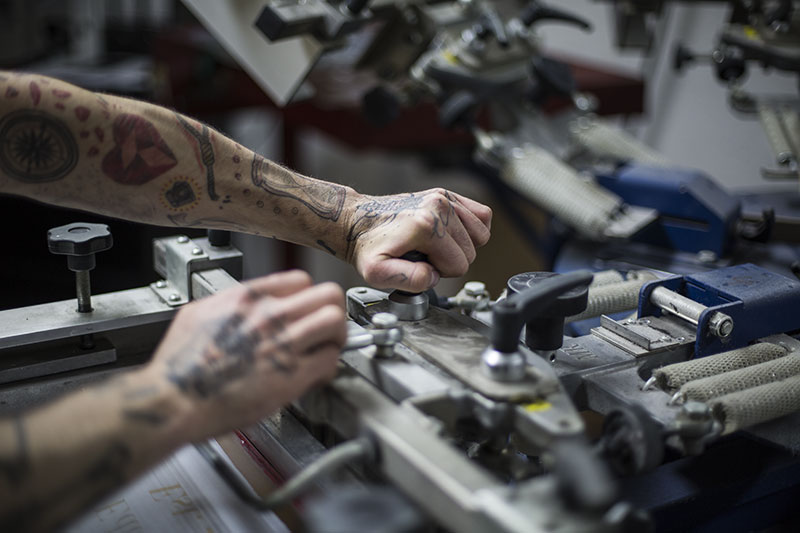
Im Siebdruck wird in der Regel mittels eines Rakel Farbe durch ein Sieb gedruckt. Dazu wird das Sieb mit deinem Motiv belichtet und eine Sieb-Schablone auf dem Gewebe erstellt. An denjenigen Stellen des Gewebes des Sieb, wo dem Druckbild entsprechend keine Farbe gedruckt werden soll werden die Maschenöffnungen des Gewebes durch eine Schablone farbundurchlässig gemacht. Nach der Erstellung der Schablonen auf dem Siebdruck-Rahmen , verspannen wir die Rahmen in einem sogenannten Karussell und passen alle einzelnen Farben und Flächen aufeinander perfekt ein. Es wird nun mit einem Siebdruck Rakel die Farbe durch das Sieb gedrückt und auf dem Textil mittels Durchlauftrockner bzw Zwischentrockner bei mehrfarbigem Siebdruck fixiert und somit haltbar gemacht. Ein Mehrfarbiges Motiv wird in einem Durchgang auf Textilien oder andere Materialien gebracht.

Siebdruck im Detail
Entwicklungs Folie
Siebdruck Rakel
verwendete Farbe
Siebdruckrahmen
unbelichtete Stellen werden aus lichtempfindlicher Schicht ausgewaschen, dadurch entsteht eine „Schablone“ mit der das Motiv gedruckt werden kann
Textil Material
wird mit entsprechender Farbe bedruckt
SIEBDRUCK IRISDRUCKVERFAHREN in München
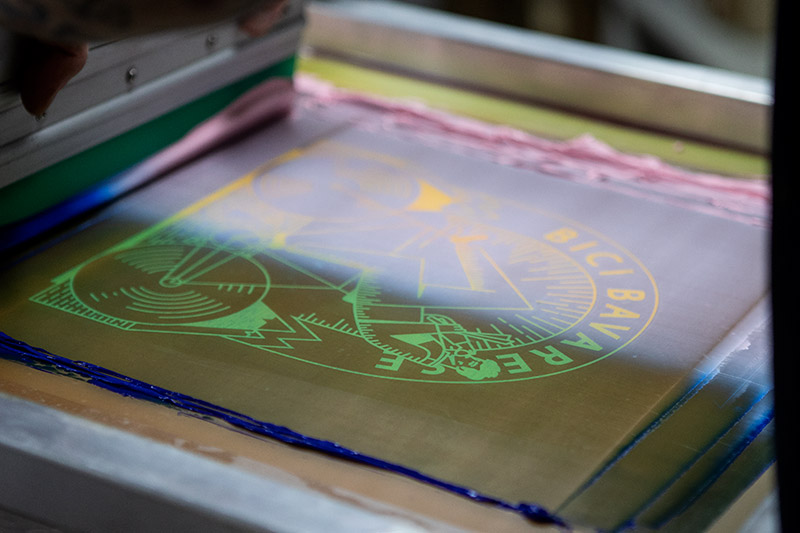
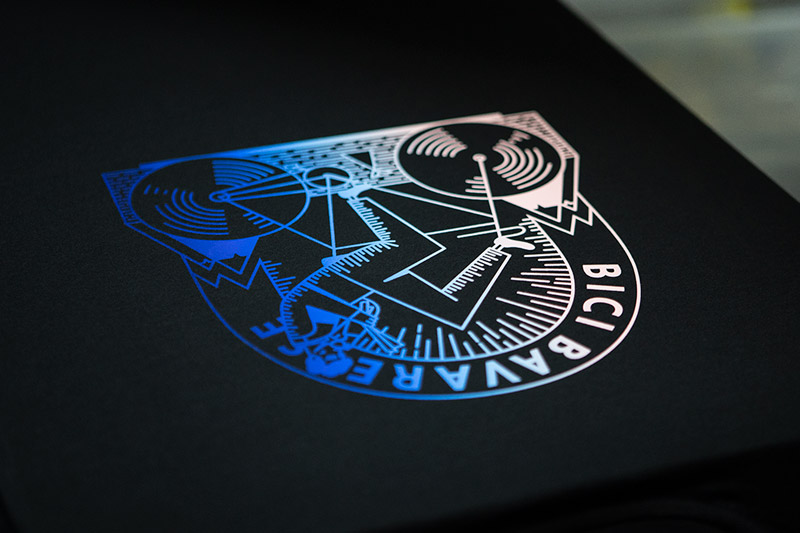
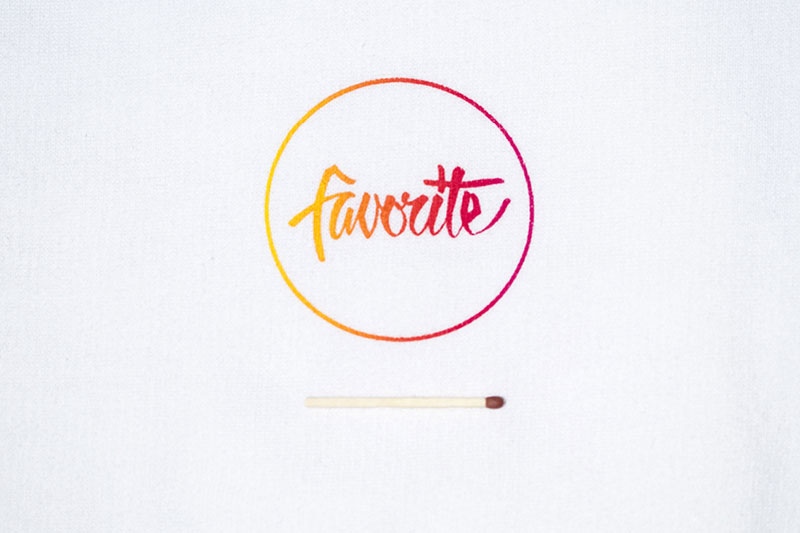
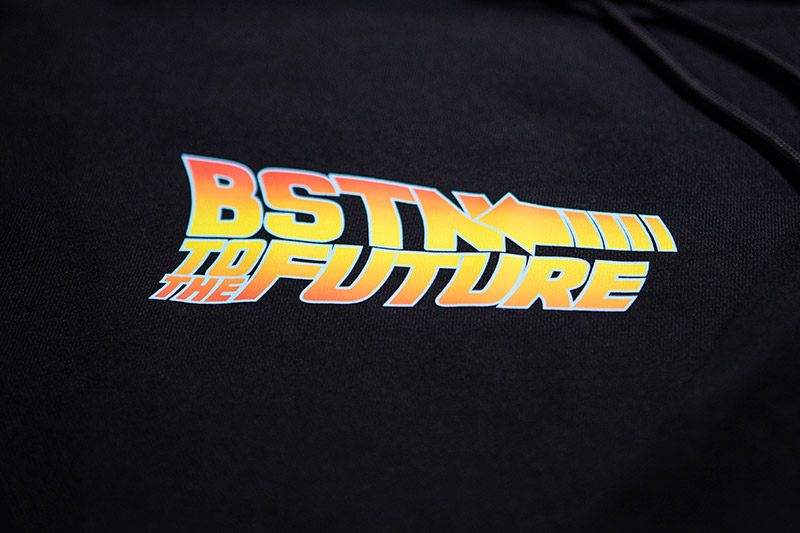
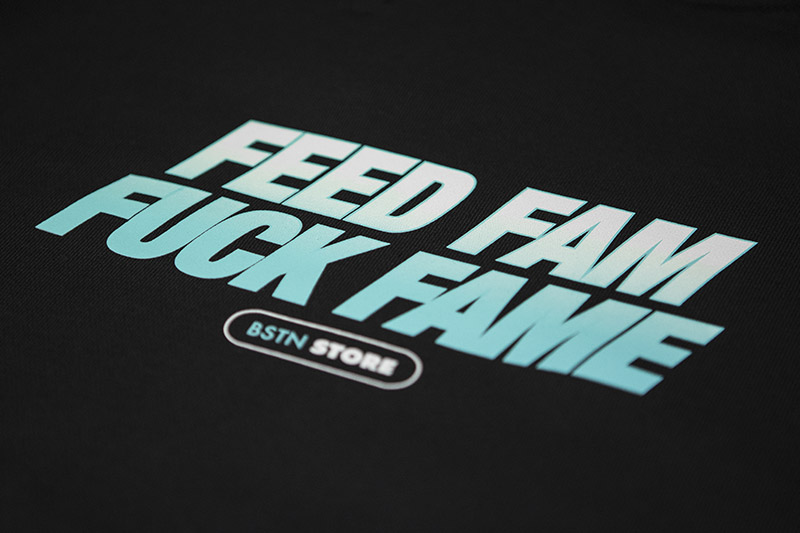
Durch jahrelange Erfahrung im Siebdruck beherrscht unser Team eine Vielzahl an verschiedenen Drucktechniken. Der Irisdruck ist hierbei eine spezielle Art des Siebdrucks und sorgt immer für ein visuell beeindruckendes Ergebnis durch viele Farben. Durch das vermischen der Farben mite dem Rakel direkt auf dem Sieb selbst ergibt sich auch so im Siebdruckverfahren die Möglichkeit, einfache oder mehrfarbige Farbverläufe erzeugt werden. Unsere Drucker sind Spezialisten im Irisdrck und werden deine Farb Verläufe mit höchster Präzision mit dem Gummi-Rakel verwirklichen.
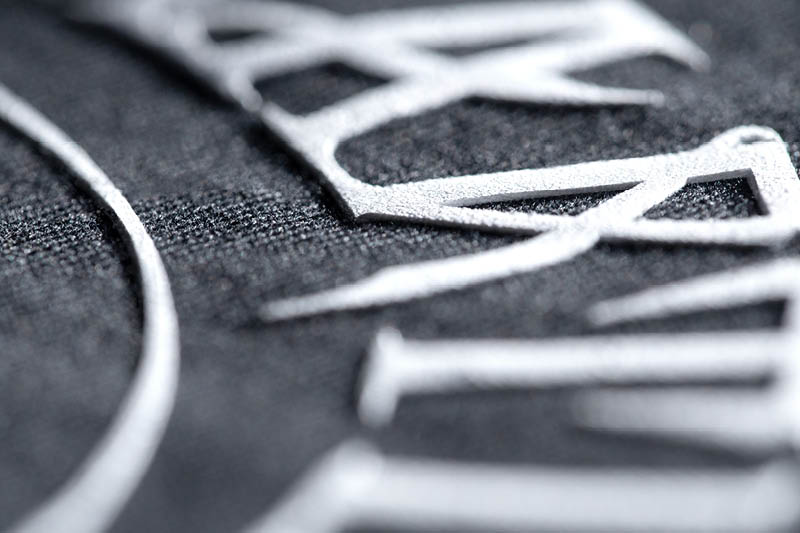
ERHABENER 3D SIEBDRUCK
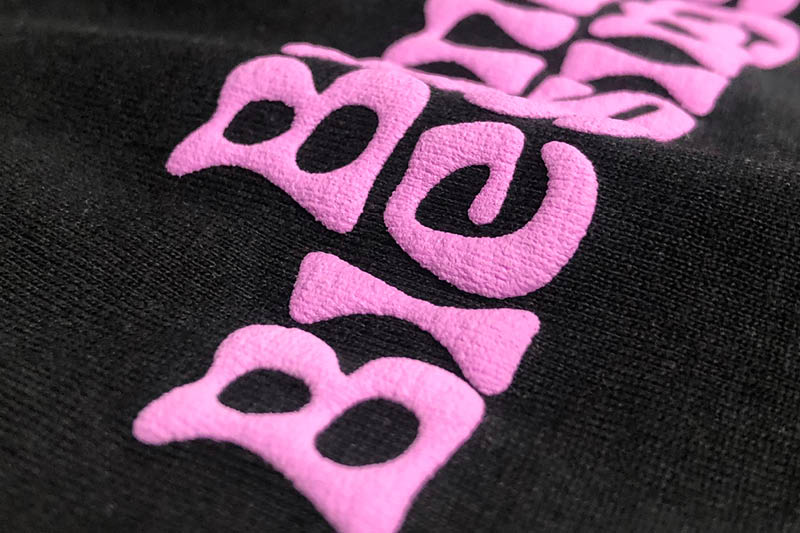
Mit Zusätzen lässt sich im Siebdruck ein 3D Effekt erzielender erhaben auf dem Textil liegt. Wir sind dein Partner wenn es um schwierig umzusetzenden Siebdruck geht.
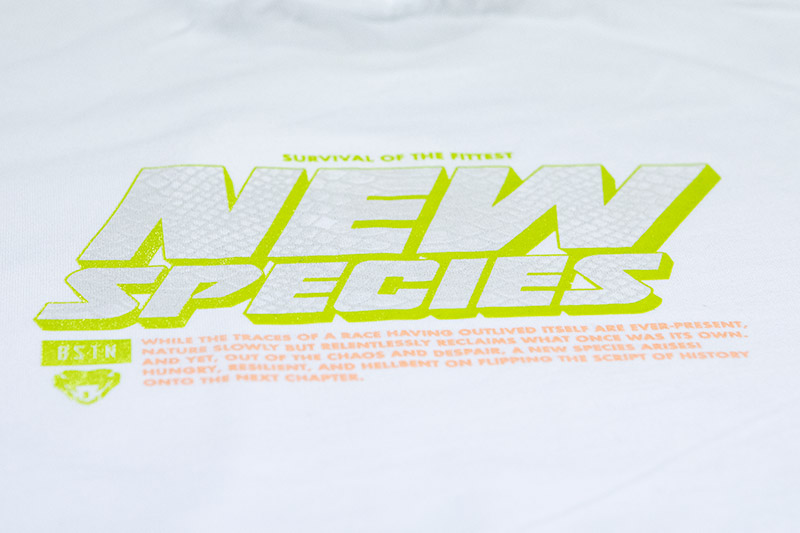
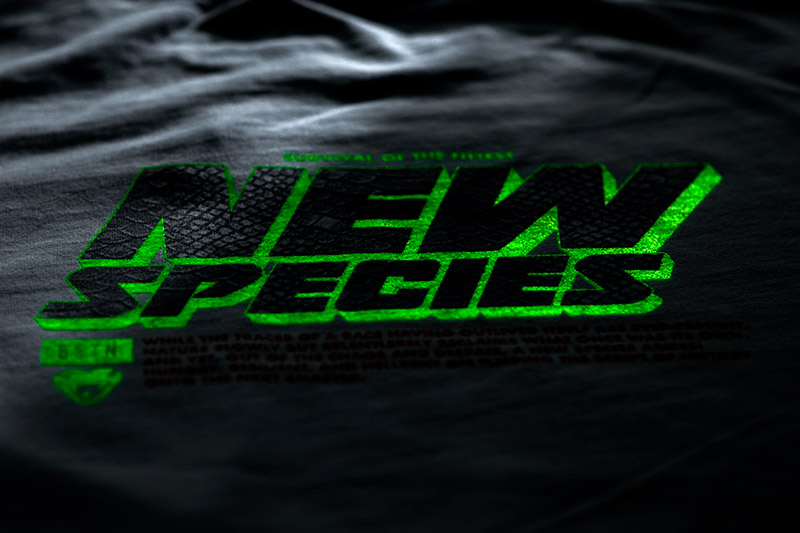
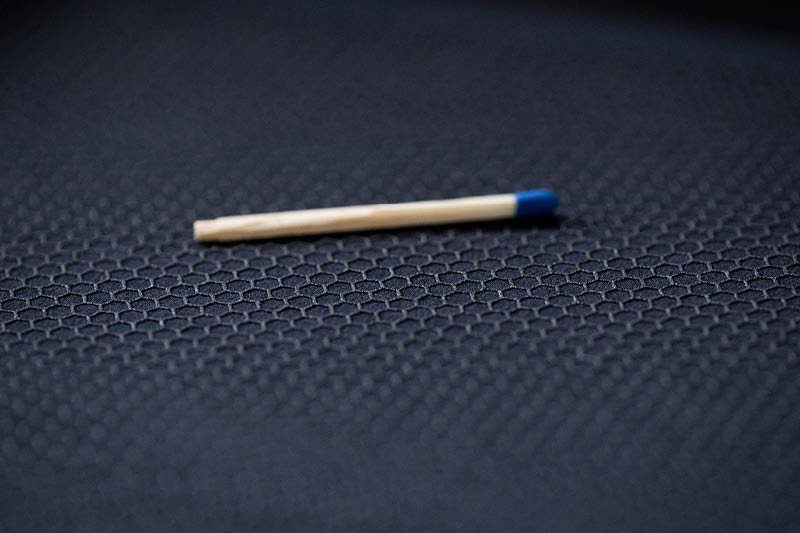
EFFEKTFARBEN IM SIEBDRUCK
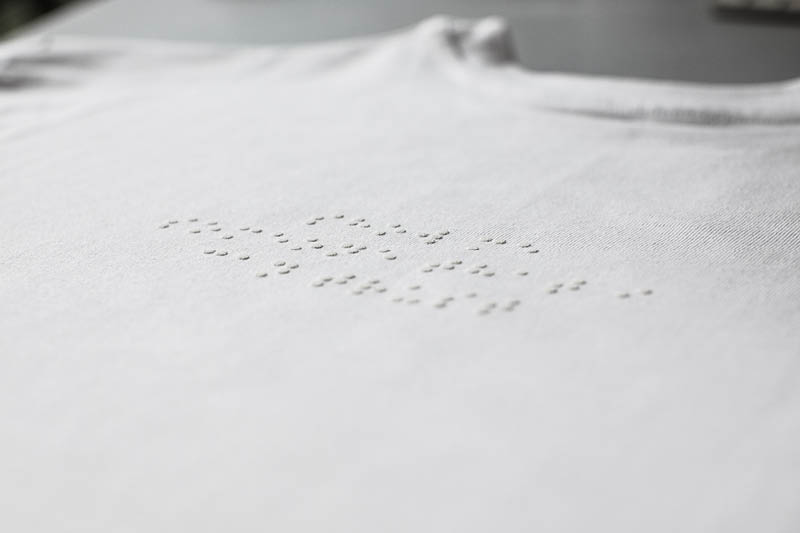
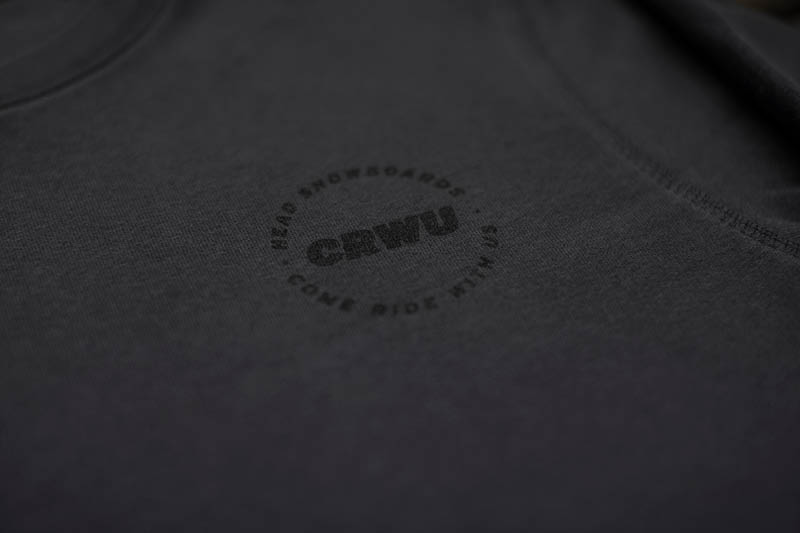
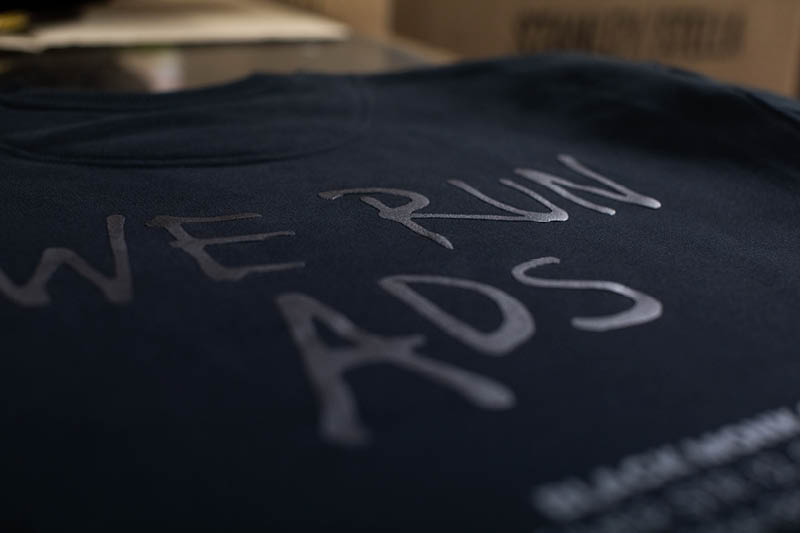
TON IN TON FARBE PER SIEBDRUCK
DIE RICHTIGE WAHL DES TEXTIL
Um ein perfektes Druck-Ergebnis zu erhalten muss nicht nur die Druckart sonder auch das zu bedruckende Textil stimmen. Hochwertige Materialien unterstützen zusätzlich Farb-Wiedergabe und klare Linien vom umzusetzenden Motiv. Im Textildruck eignet sich Baumwolle wegen seiner guten Hitzebeständigkeit besonders gut bei mehrfarbigen zu bedruckenden Shirts. Wir helfen dir gerne bei der Auswahl der passenden Textilien, egal ob T-Shirts, Polos, Pullies, Hoodies, Taschen, Müthzen ,etc.
Verschaffe dir hier einen Überblick über unsere meist verwendeten Textilien.
Get an overview of our most frequently used textiles here.
SIEBDRUCK AUF PAPIER UND ANDEREN MATERIALIEN
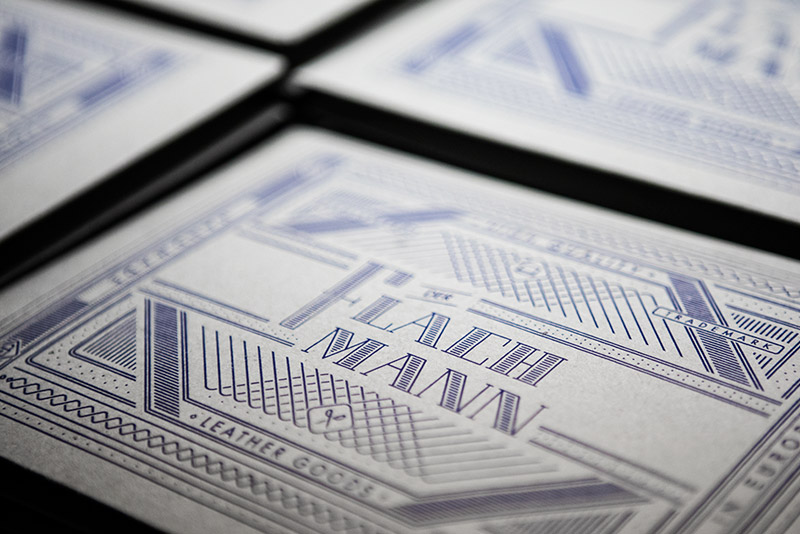
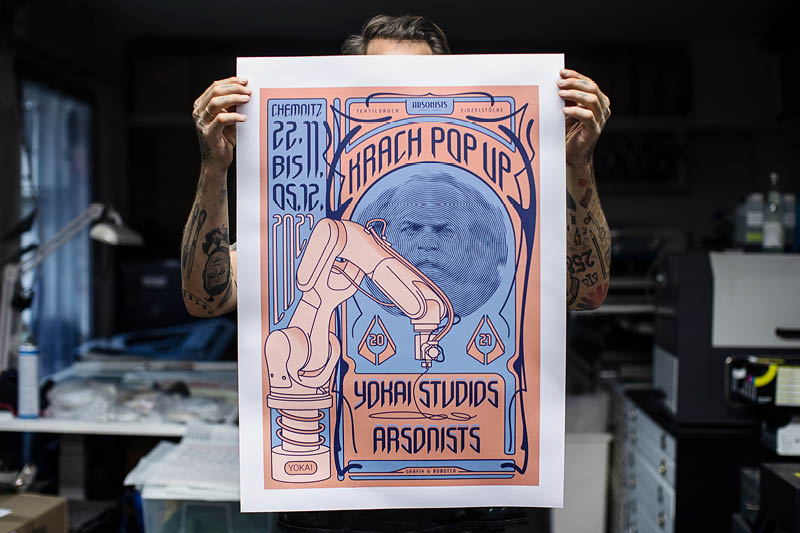
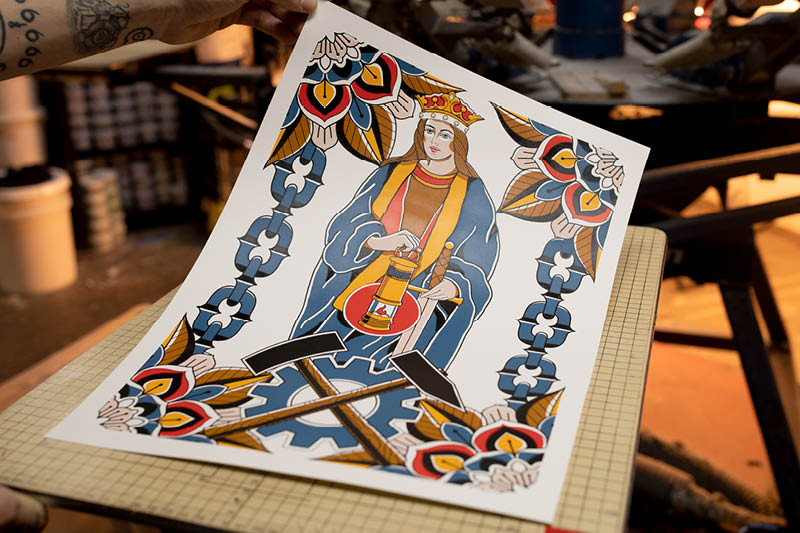
Neben dem Siebdruck auf Textilien bieten wir dir auch Druck auf Papier auf höchstem Niveau. Siebdrucke finden hier Einsatz auf Plakate, Kunstdrucke, Verpackungen, Visitenkarten, Grußkarten oder anderen plan bedruckbaren Stoffen wie Platten aus Metall, Holz, Glas, Keramik oder individuelle Werbemittel. Plakate können in einem Standard Format bis DINA2+ oder auch DINA1 gedruckt werden. Besonders geeignet sind im Druck auf Papier Projekte die mit dunklen Bedruckstoff oder speziellen Sonderfarben punkten wollen. Die Qualität des Siebdrucks ist die höchst mögliche und bietet beste Farbbrillianz im Druck.
FAQ rund um das Thema Siebdruck
Bietet ihr auch Siebdruck Workshops in München an ?
Ja klar, wir bieten Kurse für Gruppen und Workshops für Geschäftsveranstaltungen an. Melde dich per Voranmeldung für deine komplette Firma an. Hier findest du mehr Informationen zu unseren Textil Workshops. Darüber hinaus bieten wir auch externe Workshops mit einem mobilen Setup ausserhalb von München an. Egal ob Event oder Messe, wir unterstützen dich mit unserem kreativen Team von Anfang bis Ende. Melde dich jetzt zu einer Teilnahme an.
Siebdruck auf Textilien – Ist Siebdruck eigentlich die richtige Technologie für mich als Kunden ?
Wir wählen je nach deinen Druck Vorgaben die richtige Veredelungstechnik aus. Sollte der Siebdruck auf Grund Auflage oder vielen Druckfarben nicht die Richtige Technik sein, empfehlen wir dir gerne angepasst auf Stückzahlen und Druckverfahren Alles ander Angebote entsprechende an.
Was sind die Vorteile vom Stick im vergleich zu Siebdruck ?
Was kann ich bei Arsonists in München bedrucken lassen ?
Siebdruck VS Digitaldruck ?
In größerer Auflage eignet sich immer der Siebdruck am besten, wenn die Auflage jedoch kleiner ausfällt oder ein Druckmotiv sehr viele Druckfarben hat, eignet sich der Digitaldruck besser. Beim Siebdrucken ist der Prozess der Einrichtung der Maschinen immer sehr zeitaufwendig und das spiegelt sich vor allem in kleinen Auflagen auf den Preis aus. Im Digitaldruck sind auch kleine Produktionen ab 10 Stück denkbar. Besonders geeignet sind im Siebdruck Motive mit geringer Farbanzahl um Kosten effektiv zu arbeiten. Ein foto ist z.B besser in einem Digitaldruck umzusetzen da hier die Farbanzahl keine Rolle spielt.
Wo ist eure TEXTILDRUCKEREI IN MÜNCHEN?
Anfahrt zur Siebdruckerei Arsonists ?
Wenn du aus dem Raum München kommst ist es einfach uns zu besuchen. Du kannst direkt von zu Hause mit dem Auto kommen, wir haben Parkplätze direkt vor unserer Location. Besucht uns von zu Hause mit den öffentlichen Münchner Verkehrsmitteln, steig in der Brudermühlstraße aus. Von hier sind es nur wenige Gehminuten zu unserer Siebdruckwerkstatt.
Wie lange sind die Lieferzeiten in der Regel ?
In der Regel haben wir eine Lieferzeit von 5-10 Werktage nach Auftragsfreigabe. Wir bieten aber auch Expressmodelle innerhalb 3 bzw 5 Werktagen an. Nimm mit uns Kontakt auf um genaueres zu erfahren oder Informier dich hier direkt.